Documentation / Use Cases / OppAlerts for Local Service Businesses
OppAlerts for Local Service Businesses
Review US location pages and research opportunities in the communities you serve.
A location page should explain where you provide service and what customers can expect. OppAlerts helps you review the content's city relevance and research local coverage and participation opportunities. Use the review to assess whether the page provides useful information beyond a city name.
For a contractor serving a city and nearby communities, a clear service boundary helps customers at the edge of the area determine whether they can book a visit. Replacing the city name on otherwise identical pages doesn't answer that question.
Use the city comparison to inspect the text
Content Optimizer compares your text with a selected city category. The location taxonomy covers 4,117 US cities with populations of 10,000 or more. Non-US coverage is in development, with no published release date. The comparison shows how closely the text resembles the stored category, giving you another way to inspect what the page is about.
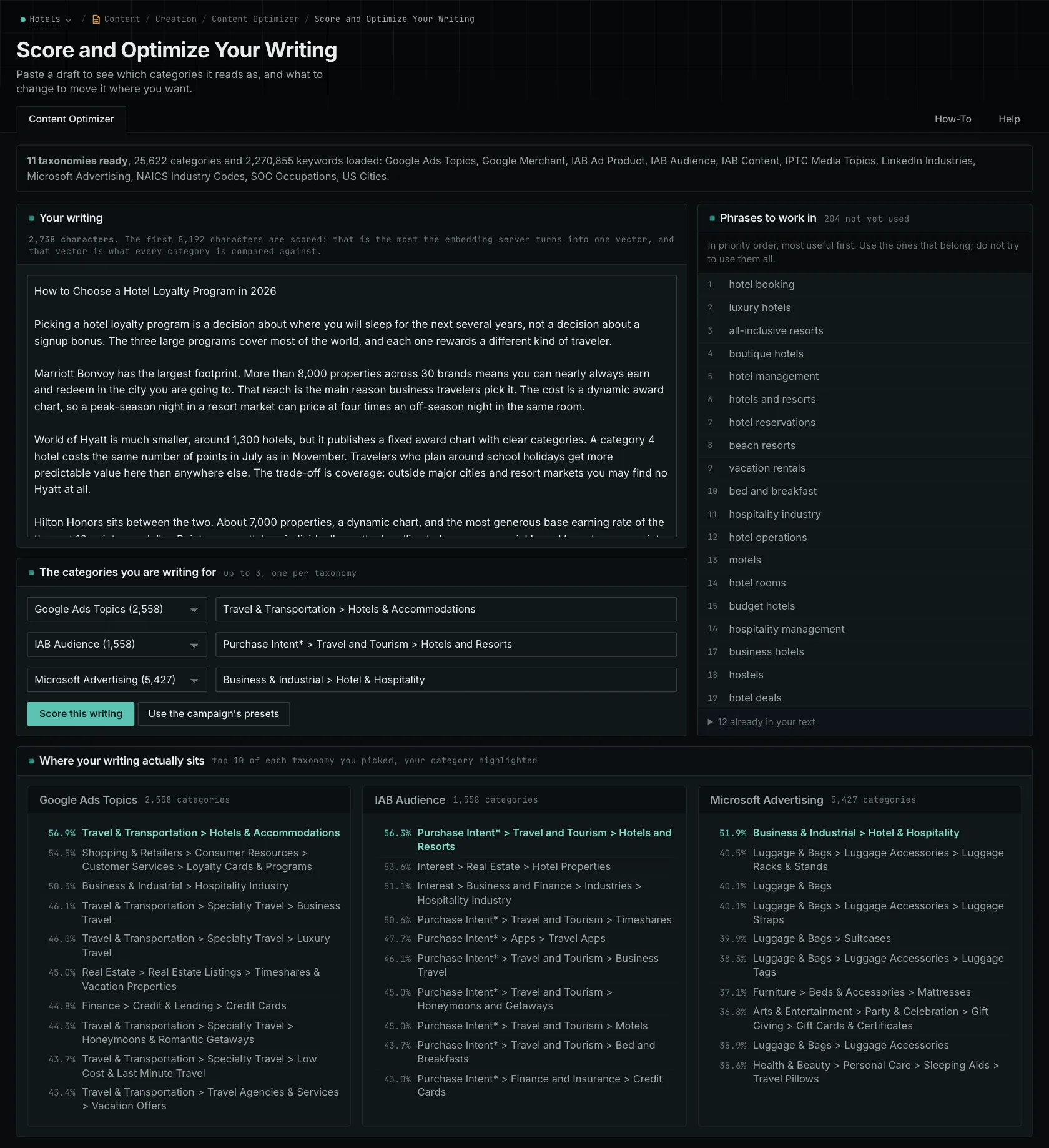
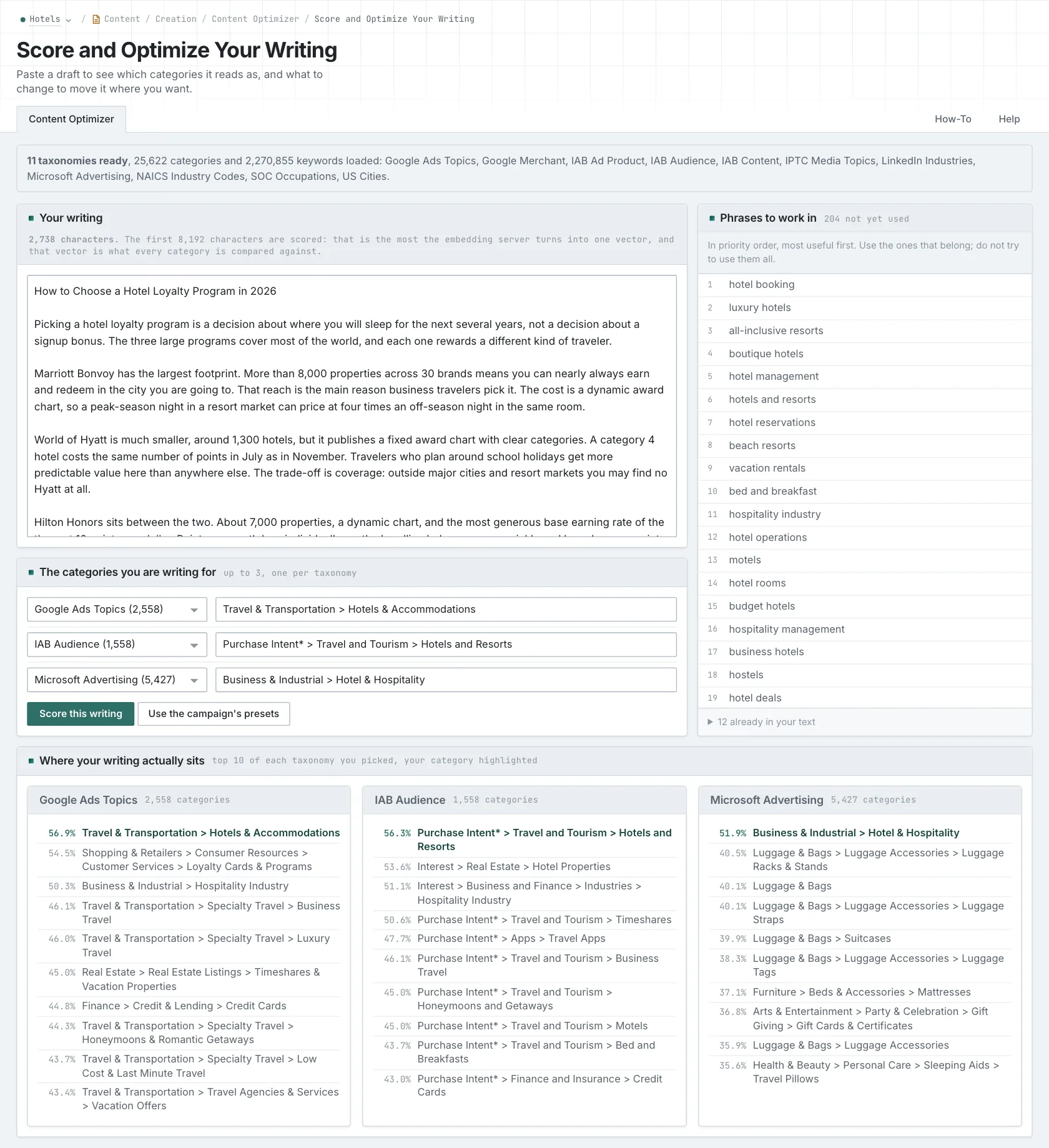
If other cities appear ahead of your target, reread the text for references to a wider region or language associated with another place. The ordering doesn't establish the cause. Similar scores for two pages don't prove duplication either; compare the information on the pages.
Review the contractor's pages for differences in service boundaries, access conditions, and customer questions. Include local requirements that affect the work after checking them against reliable information. A similarity score can't verify rules, addresses, or claims of local experience.
Explain what customers need to know about the area
You can accurately describe a new service area before completing your first job there. Be clear about that, without inventing experience, implying an office, or listing places you don't serve. If a city page adds no distinct question or supported information, one clear regional page may serve customers better.
Research local relationships with opportunity-type searches for sponsorships, associations, and directories. These searches can find candidates beyond your competitors' observed links. Read each organization's participation terms and contact instructions before pursuing it.
Use separate tools for review monitoring, business-profile management, citation submission, and map listings. The city comparison checks your text; it doesn't measure map rankings.