See what OppAlerts can do for your team
- 01AI Search Visibility & SEOSee who AI recommends and how your visibility changes over time.
- 02Public RelationsFind current stories and publications where your expertise fits.
- 03Reputation MonitoringKeep up with mentions of your business, with fewer unrelated results.
- 04Link BuildingFind competitor link gaps, unlinked mentions, and sites to contact.
- 05Content MarketingCheck what your draft is really about, then find places to share it.
- 06Competitive IntelligenceSee where competitors get linked, mentioned and recommended.
01AI Search Visibility & SEO
Get recommended by AI and found in Google.
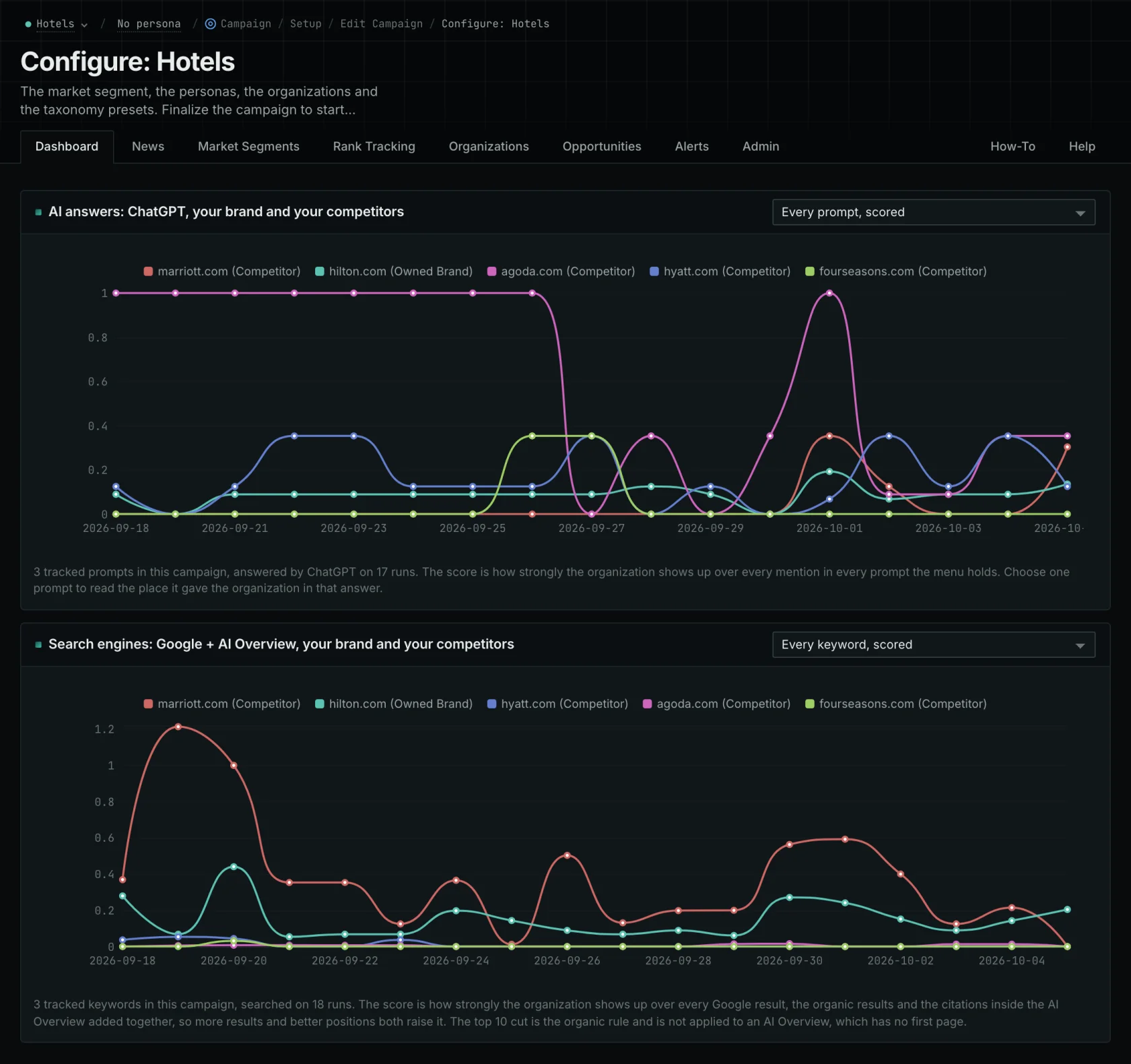
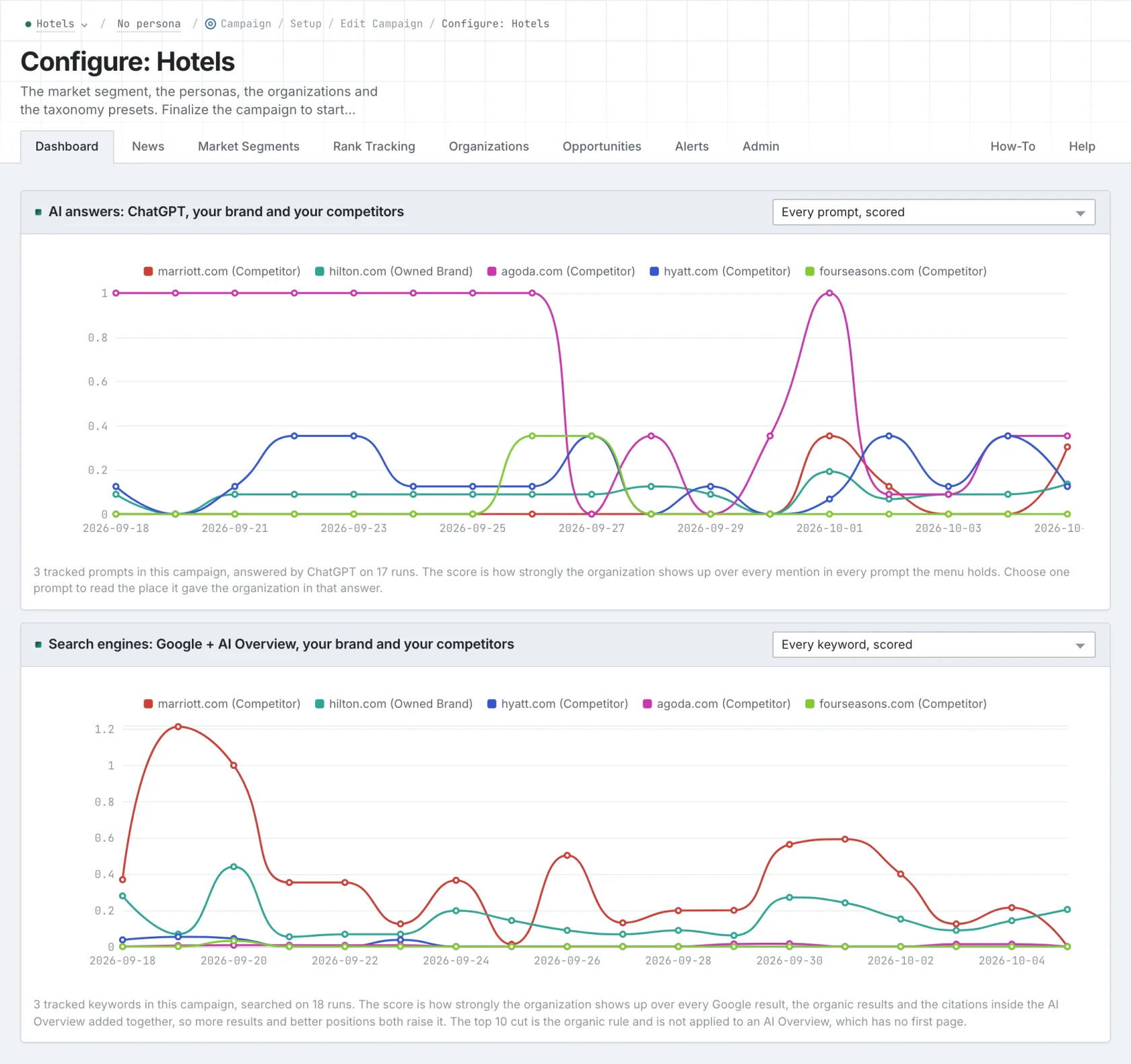
Ask AI the same question twice and you can get different recommendations. You need to know how often your brand appears, who appears alongside it, and which links and mentions are worth pursuing.
- Share of AI RecommendationsSee which brands AI recommends across models, with scores based on repeated runs.
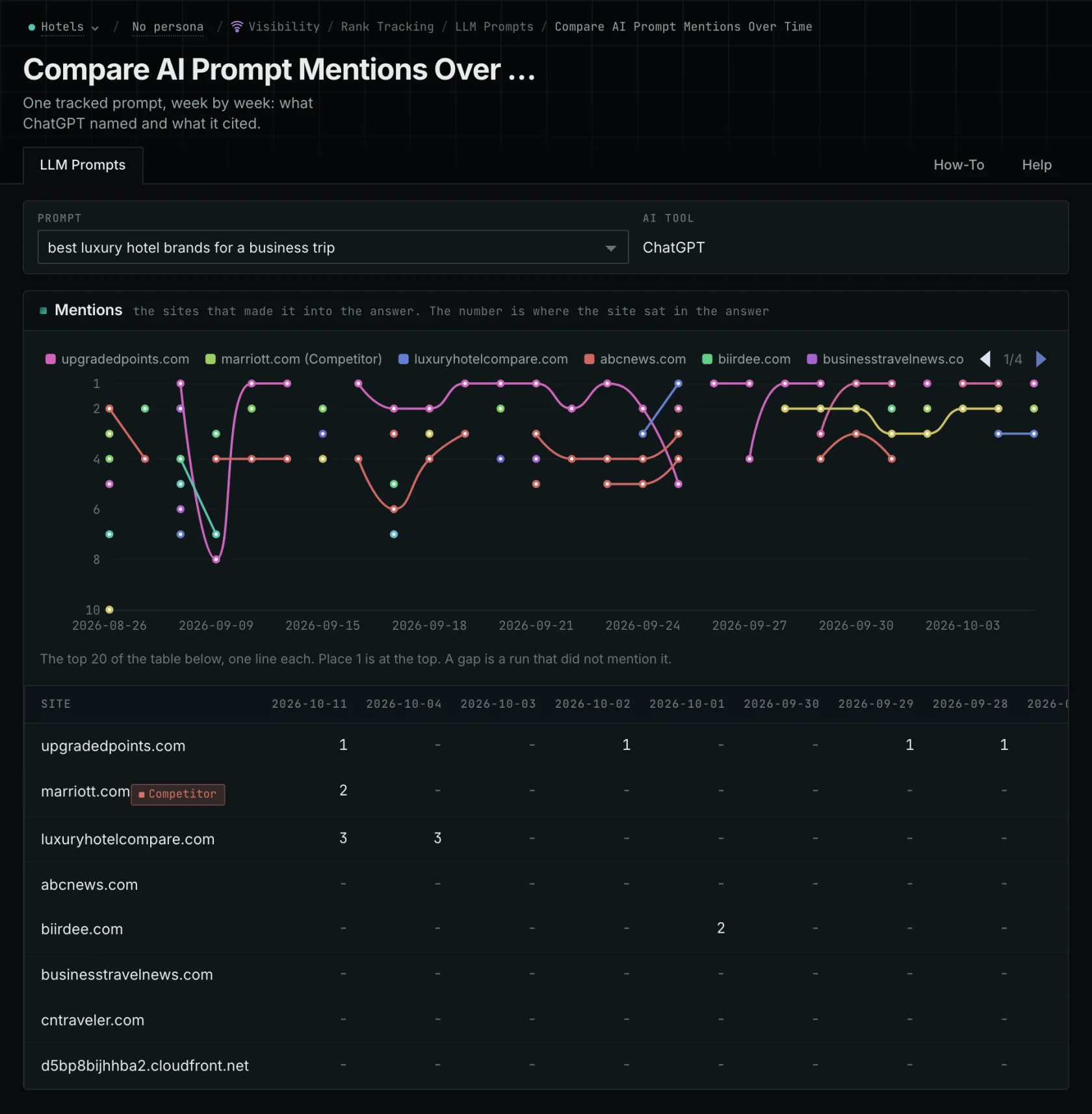
- Visibility in ChatGPT AnswersTrack 10 prompts per campaign each week to see when your brand appears and who else gets named.
- Visibility in Google and AI OverviewsTrack 10 Google keywords per campaign each week, including the AI Overviews your buyers see.
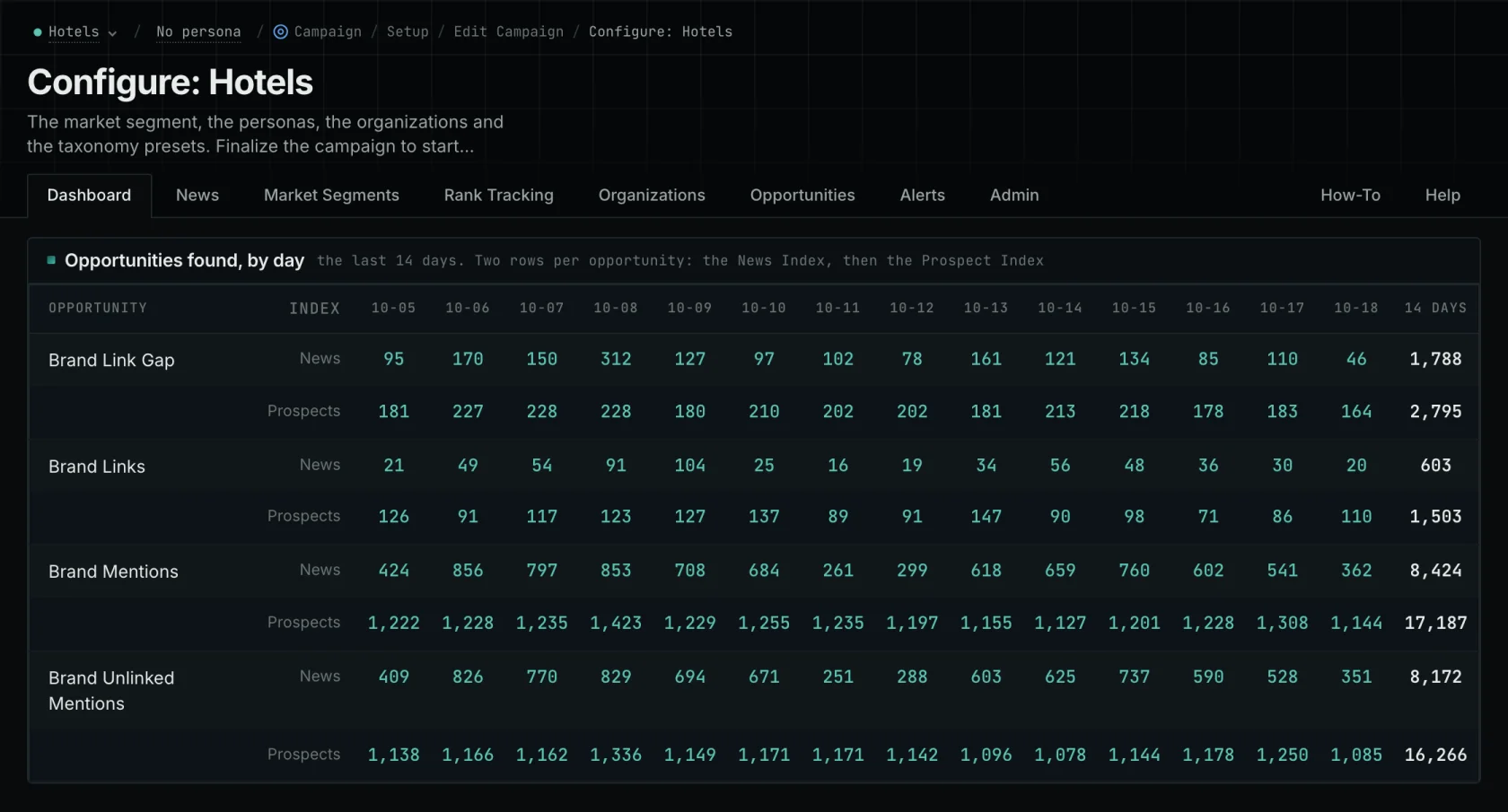
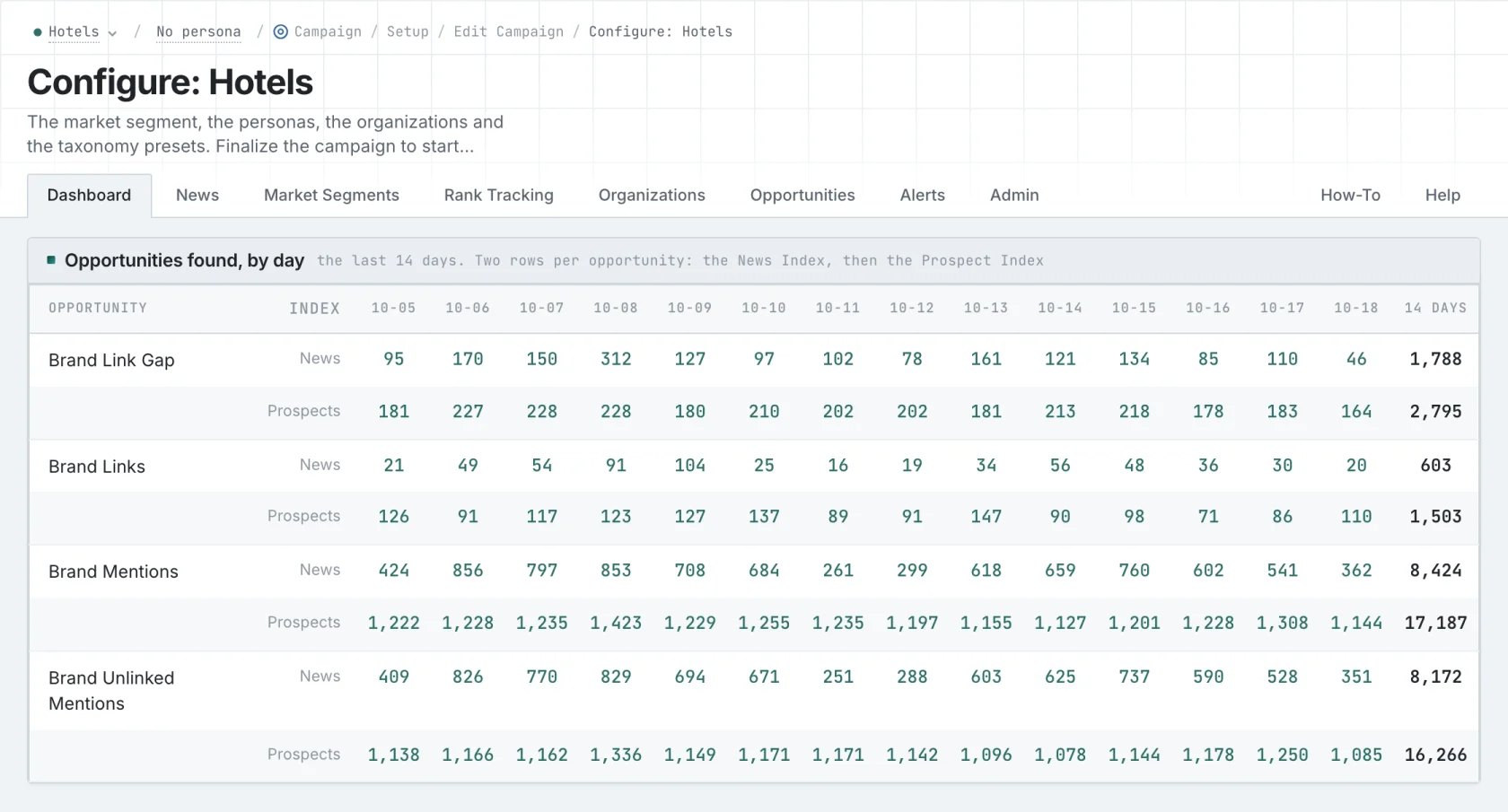
- More Backlinks and Brand MentionsFind competitor link gaps and unlinked brand mentions, filtered by relevance to your industry.
02Public Relations · Monitoring and reactive PR
Get coverage in the places your buyers pay attention to.
Your expertise may be exactly what a story needs. The work is finding that story while it's current, checking the publication's coverage, and knowing who to contact.
- Coverage in Your MarketFind timely stories from over 100,000 news sites and 20 million RSS feeds, delivered every morning.
- More Podcast AppearancesFind shows that cover your industry across more than 4 million monitored podcast feeds.
- Coverage Alongside CompetitorsSee which publications cover your competitors and which regularly cover your subject.
- Pitches to the Right ContactsLook up contact pages, email addresses and social accounts for about 40 million sites.
03Reputation Monitoring
Know what's being said about your brand, and when to respond.
If you're Four Seasons, an alert about Vivaldi or a team's last four seasons doesn't help. You need mentions about your business, with enough context to decide whether they need a response.
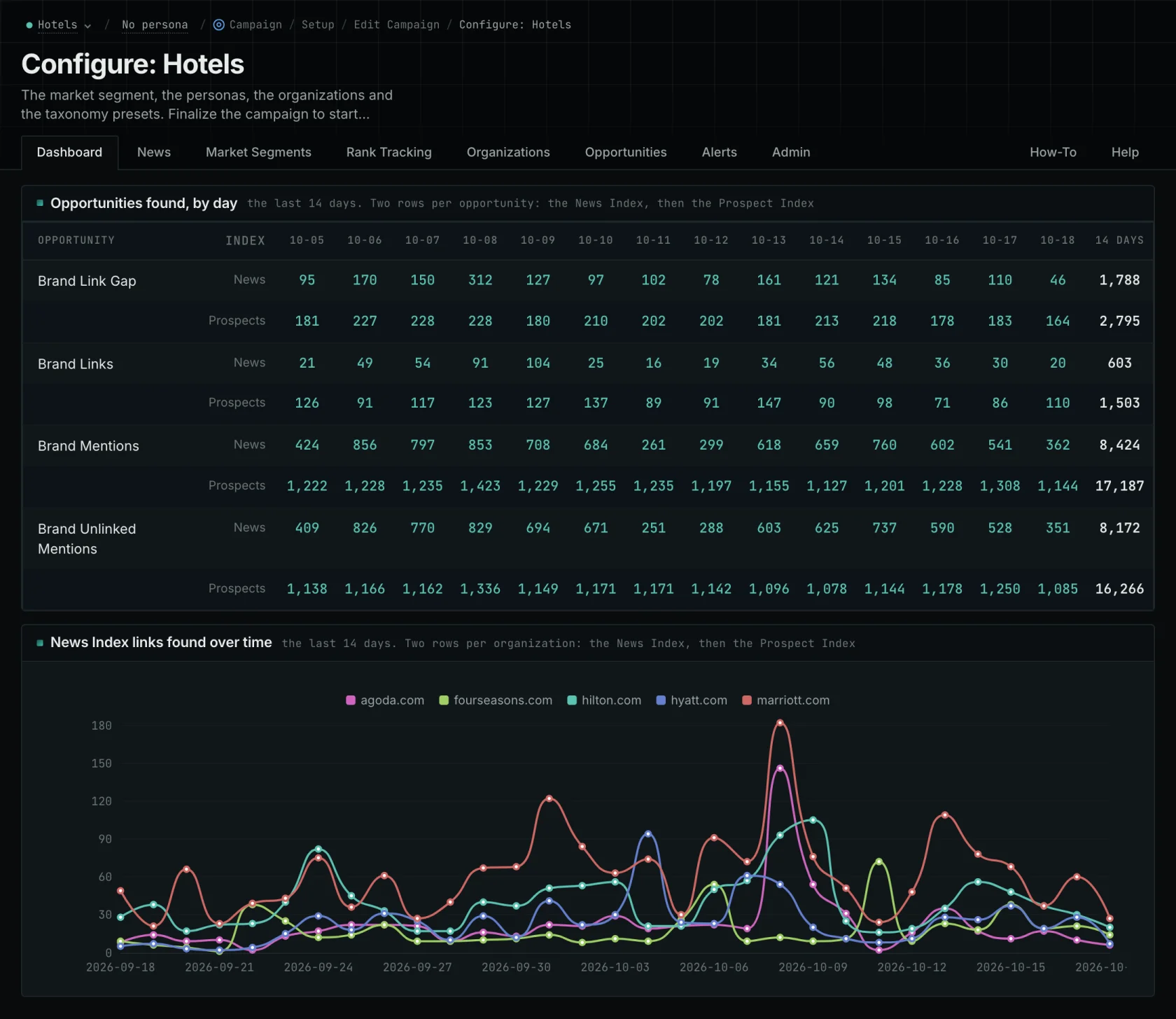
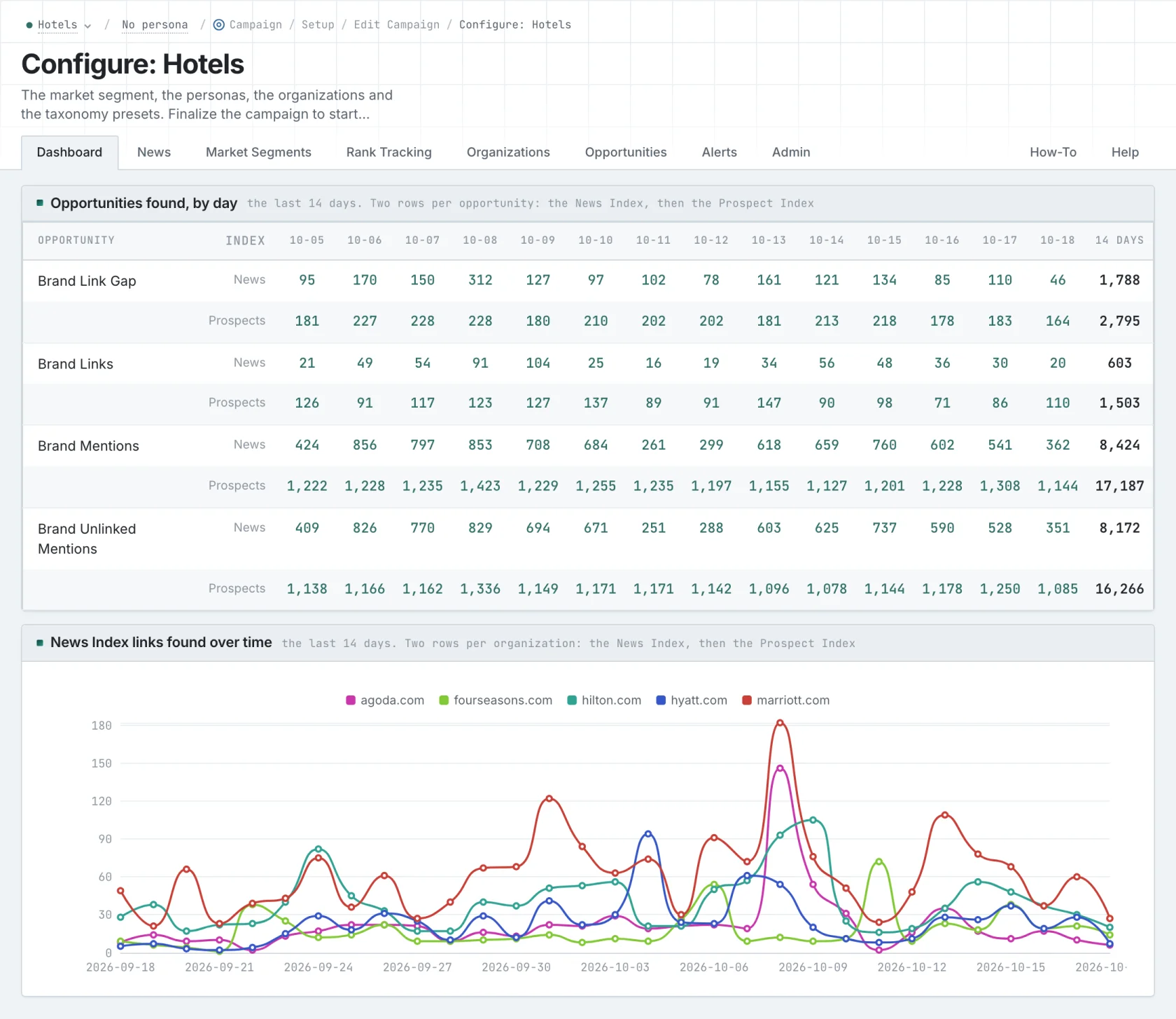
- More Brand Mentions FoundMonitor your brand and competitors across news, blogs, podcasts and the Prospect Index.
- Fewer Unrelated Mentions to ReviewFilter by what a page is about, so you can focus on your industry when a brand name has several meanings.
- Inaccurate Coverage AddressedCheck the publisher's PageRank, see which brands it links to, and find contact details for your response.
- Faster Responses to New CoverageGet new mentions and opportunities for each campaign in one email each morning.
04Link Building
Build backlinks from contextually relevant pages.
A long prospect list doesn't tell you which links are worth pursuing. You still need to know what each page is about, who it links to, and whether there's a good reason to contact the publisher.
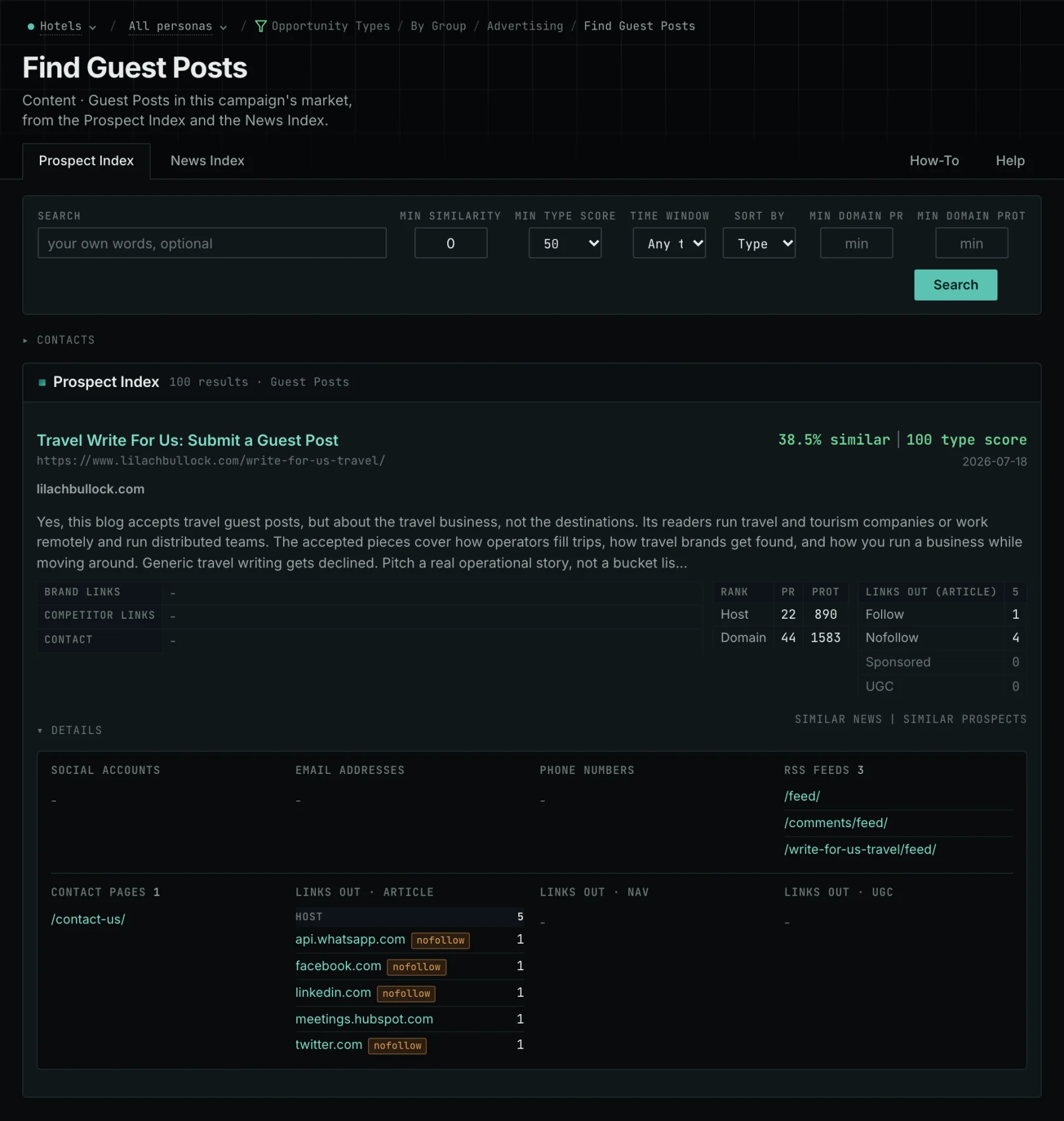
- A More Relevant Backlink ProfileFind prospects for backlinks from contextually relevant pages, filtered from over four billion web pages.
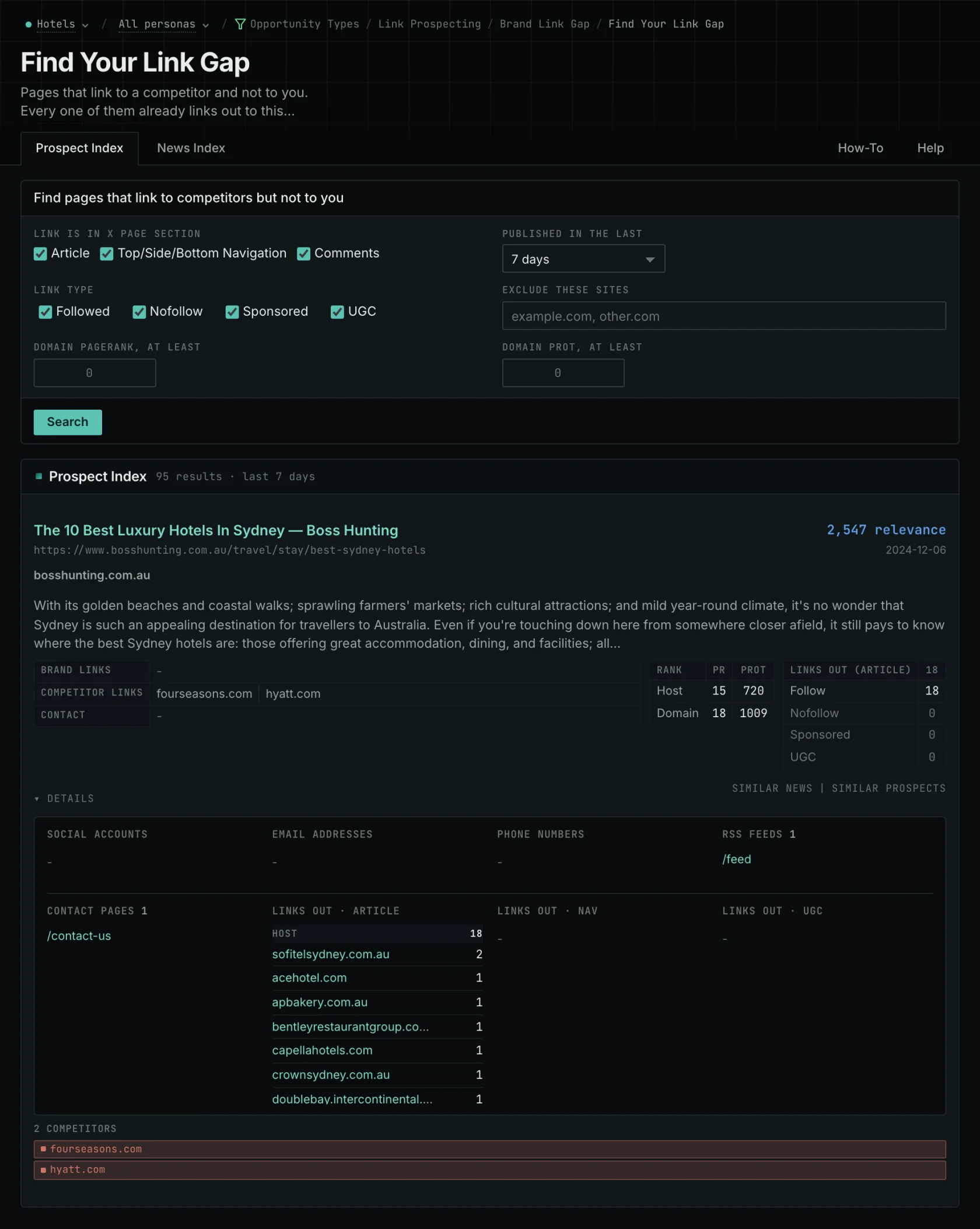
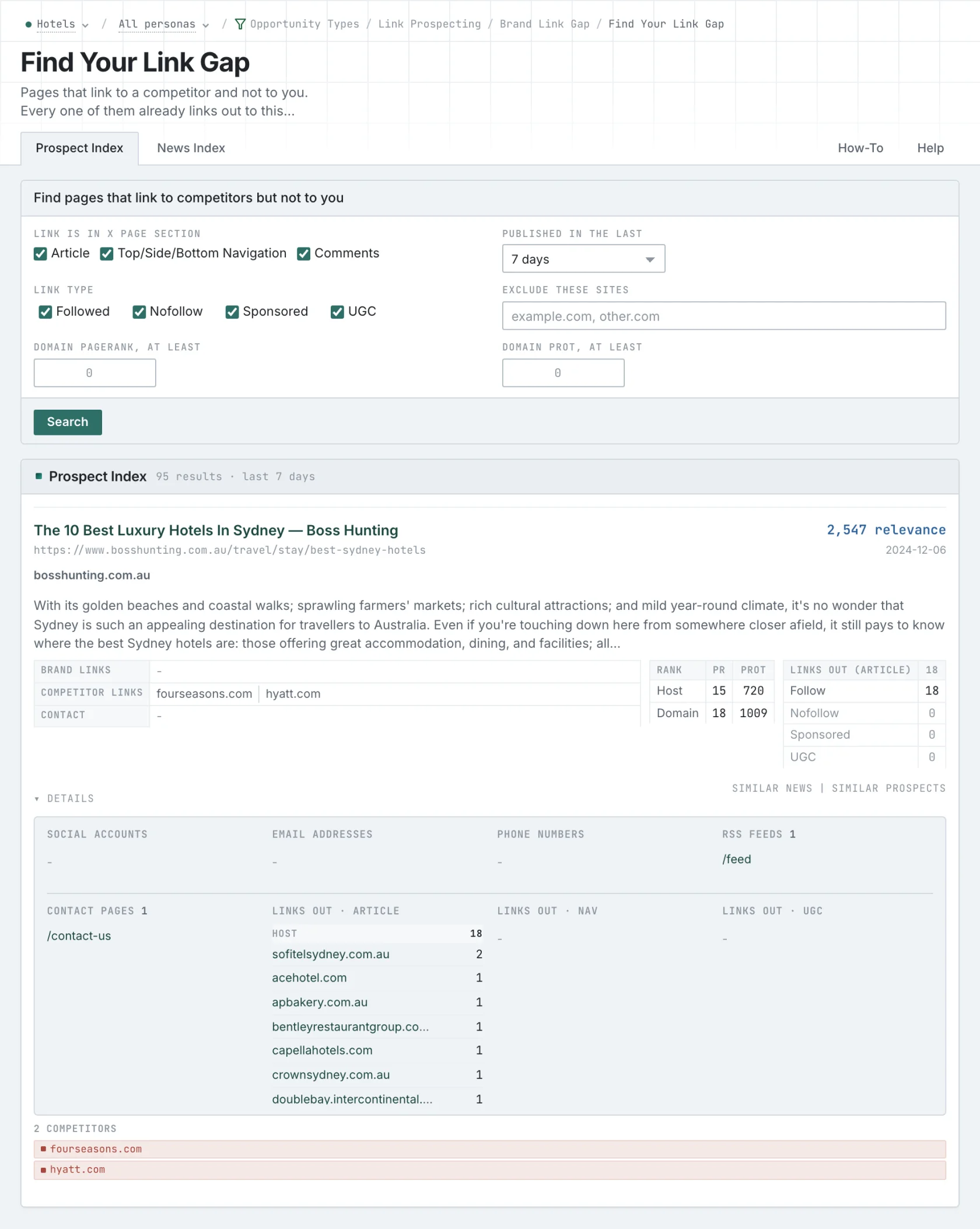
- Fewer Competitor Link GapsFind pages that link to competitors but not to you, and see which competitors each page already includes.
- More Mentions Converted Into LinksFind pages that already mention your brand without a link, so you have a specific reason to reach out.
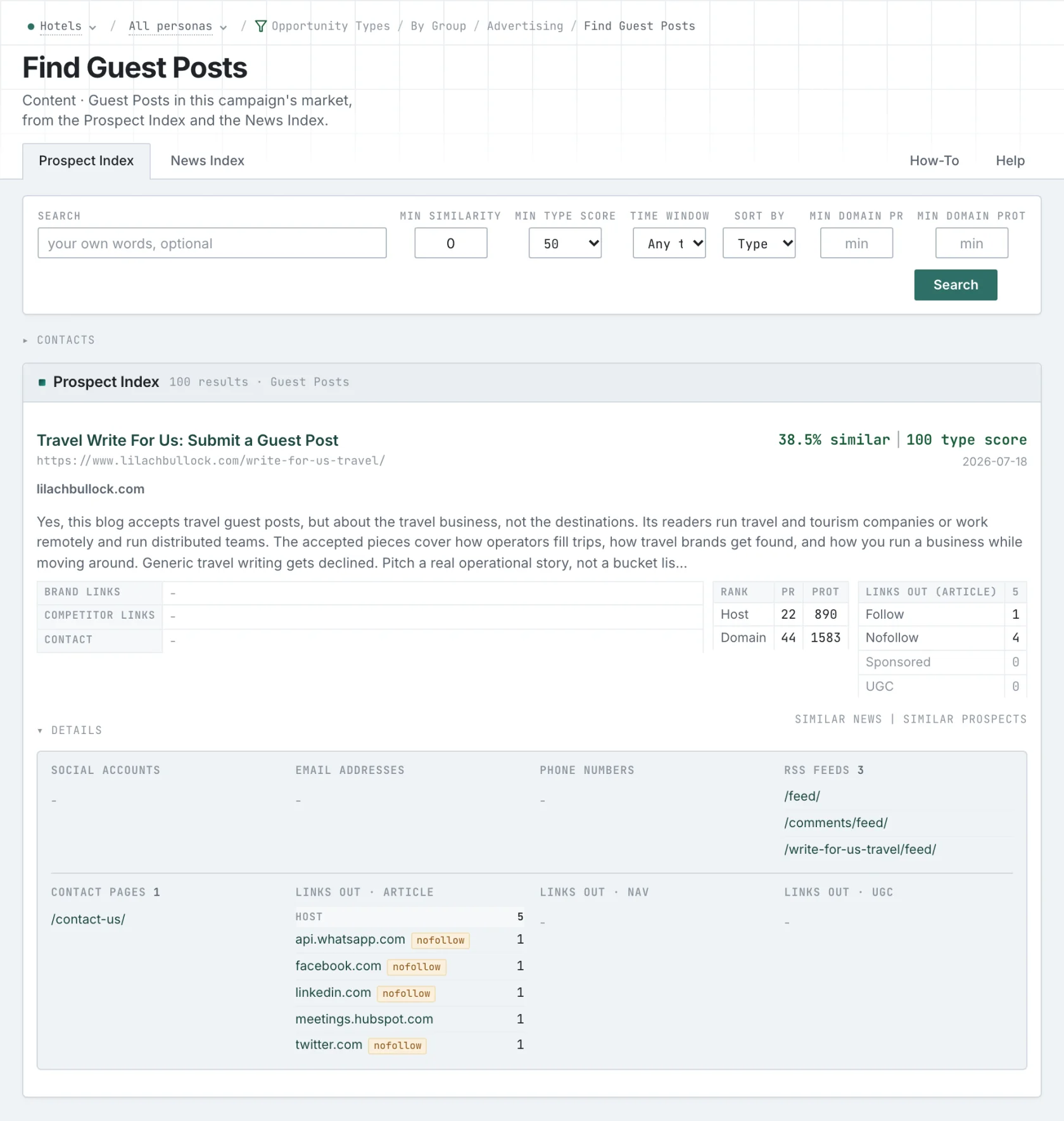
- Less Time Qualifying ProspectsCheck PageRank, followed and nofollow links, sponsored links and contact details before outreach.
05Content Marketing
Publish content that matches your market.
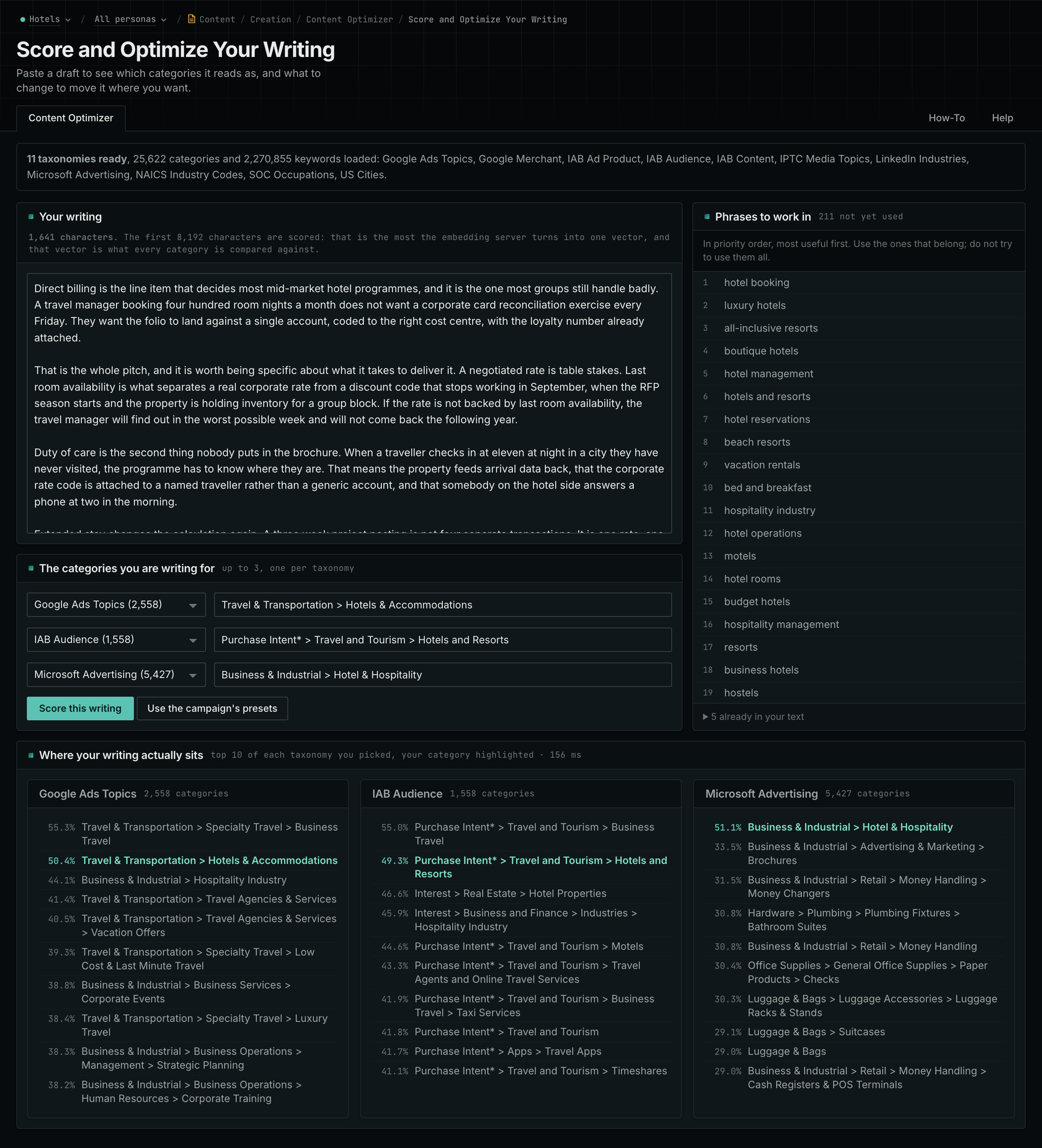
A page can mention hotels throughout and still be mostly about corporate events. Before you publish, you want to know whether the content really matches your market, and where to share it.
- Content Aligned With Your MarketCheck how closely your draft matches your target categories, using 25,622 categories across 11 taxonomies.
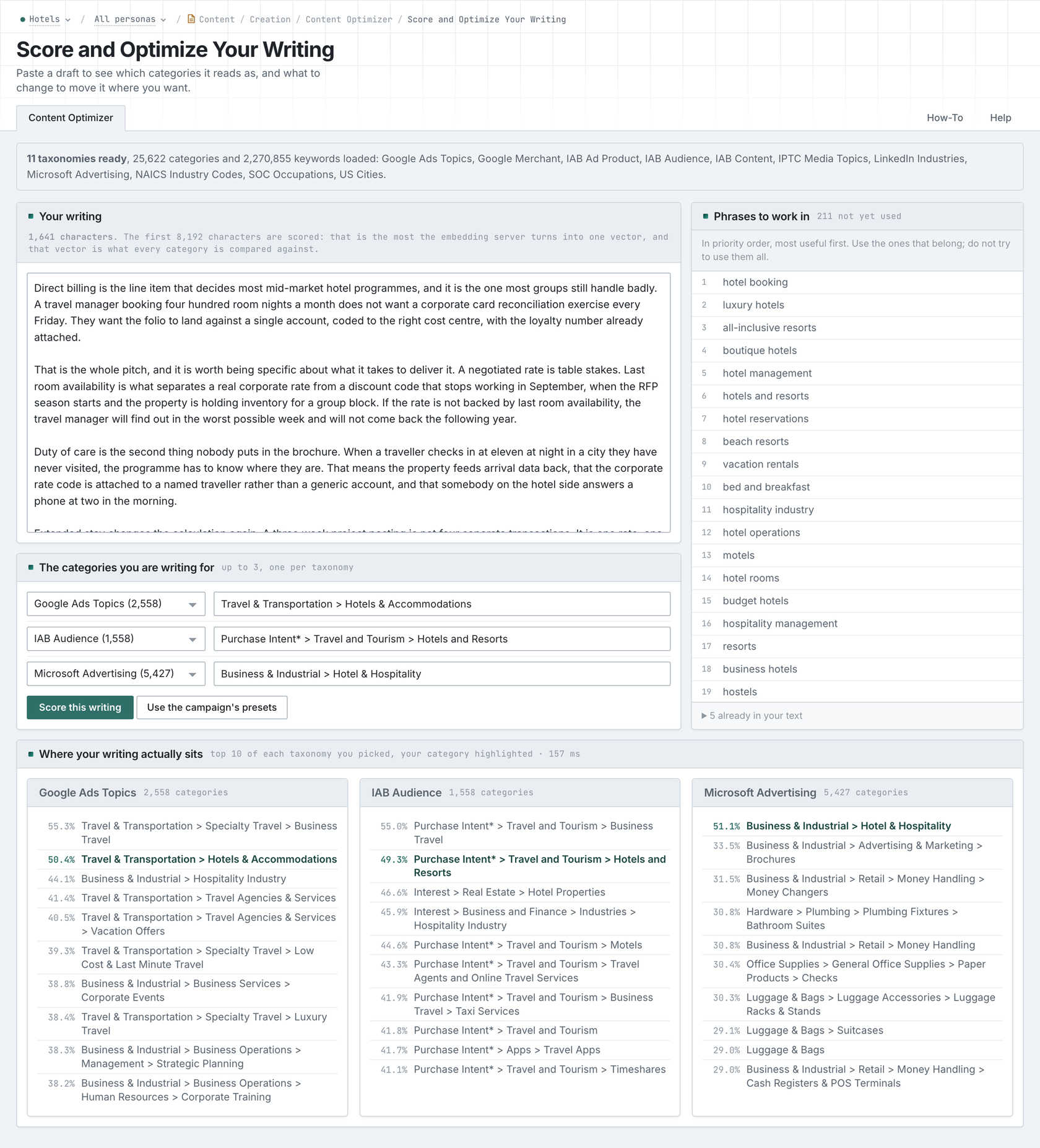
- More Focused Content RevisionsSee which phrases would bring your draft closer to your chosen categories, with the most useful first.
- Content Informed by Buyer QuestionsSee what AI tells your buyers and what articles, blogs and podcasts on your subject already cover.
- More Placements for Your ContentFind publications, resource pages, guest post opportunities and podcasts that cover your subject.
06Competitive Intelligence
Know where competitors get attention you're missing.
When a competitor keeps getting recommended, you need more than their name. You need to see where they're getting links and mentions, what has changed, and which opportunities fit your business.
- AI Visibility Compared With CompetitorsTrack which sites ChatGPT names for your buyer prompts, with competitors labeled in each run.
- Earlier Notice of Competitor CoverageSee new competitor links and mentions beside your own, found daily and filtered to your market.
- PageRank Compared Over TimeCompare your domain's PageRank with competitors, month by month, to see how the gap changes.
- Faster Competitive ReportingUse the same research in Claude, ChatGPT, Cursor, Claude Code or your own code through MCP and the API.
Pricing · Free 14-day trial on every plan
Start with a free 14-day trial.
Try the full set of tools for 14 days on any plan. You pay $0 today. If it's not a fit, cancel on your account page before the trial ends and you won't be charged.
25% offSign up by November 13, 2026 and keep your beta price for as long as you remain a customer.
OppAlerts 250
- Today$0
- 14 daysAccess to the full set of tools
- Then$185 a month. Cancel on your account page before the trial ends to avoid a charge.
A business with a few brands or markets.
- 3active campaigns
- 1team member
- 30ChatGPT prompts, every week
- 30Google keywords plus AI Overviews, every week
- 300API and MCP calls a day
OppAlerts 500
- Today$0
- 14 daysAccess to the full set of tools
- Then$372 a month. Cancel on your account page before the trial ends to avoid a charge.
An agency or a team with several clients.
- 10active campaigns
- 5team members
- 100ChatGPT prompts, every week
- 100Google keywords plus AI Overviews, every week
- 1,000API and MCP calls a day
OppAlerts 1000
- Today$0
- 14 daysAccess to the full set of tools
- Then$747 a month. Cancel on your account page before the trial ends to avoid a charge.
An agency managing campaigns across many clients.
- 30active campaigns
- 15team members
- 300ChatGPT prompts, every week
- 300Google keywords plus AI Overviews, every week
- 3,000API and MCP calls a day
Or prepay through 2027 · 10 customers · 58% off
58% offyou save $8,127
OppAlerts 1000 · 10 customers, then the offer closes
Pay $6,000 once. You're covered through 2027.
You get 30 campaigns, 15 team members, and 3,000 API and MCP calls a day. From January 1, 2028, the plan continues at $500 a month, about half the list price.
one payment now, nothing more until January 1, 2028
- Start now. The rest of 2026 is included in your payment.
- All of 2027 is covered, with no additional payments during the year.
- From January 1, 2028, pay $500 a month for as long as you stay a customer. That's about half the $997 list price.
What each plan includes
Every plan includes the same tools. Choose the number of campaigns, team members and daily tool calls that fits your work.
| Feature | Free 14-day trialOppAlerts 250 |
Free 14-day trialOppAlerts 500 |
Free 14-day trialOppAlerts 1000 |
|---|---|---|---|
| Campaigns and team | |||
| Active campaignsGive each brand or client its own campaign. Archive one when you need room for another. | 3 | 10 | 30 |
| Team membersGive each team member a separate login to work in your campaigns. | 1 | 5 | 15 |
| Morning emailNew mentions and opportunities for each campaign, in one email every morning. | Included | Included | Included |
| What every campaign finds | |||
| Brand and unlinked mentionsIn news, blogs, podcasts and the prospect index. | Included | Included | Included |
| Competitor mentions and link gapsSites that write about or link to a competitor and not to you. | Included | Included | Included |
| 79 opportunity types and 18 content typesGuest posts, sponsorships, conferences, podcast guests, awards, directories and more. | Included | Included | Included |
| Semantic relevance filterFilter content by relevance to your industry, using 25,622 categories across 11 taxonomies. | Included | Included | Included |
| Campaign researchSee which brands and sites AI recommends and which competitors appear in your buyers' searches. | Included | Included | Included |
| MCP server and read APIUse OppAlerts data in Claude Code, Claude, ChatGPT, Cursor or your own code. | Included | Included | Included |
| Tracking, every week | |||
| ChatGPT prompts10 for each campaign. | 30 | 100 | 300 |
| Google keywords plus AI Overviews10 for each campaign. | 30 | 100 | 300 |
| Daily limits via web, MCP and API | |||
| Index searchesCalls per day, shared between news and prospect searches. | 300 | 1,000 | 3,000 |
| Every other toolCalls per day for each tool, including backlinks, AI answers, tracking and site data. | 300 | 1,000 | 3,000 |
| Semantic content optimizerCheck which categories your content matches most closely and get suggestions to improve that match. | Included | Included | Included |
| 25% off when you sign up by November 13, 2026. | Start your trial now | Start your trial now | Start your trial now |
Website, MCP and API calls share the same daily limits, which reset at 4:00 a.m. New York time. Tracked prompts and keywords run Sunday night, so your results are ready Monday morning.
Enterprise and agency services
Need research on a larger scale?
We work with enterprises and their agencies on custom data and research projects. The scope can cover businesses with 50 to 2,000 locations, terabytes of backlink and mention data, or hundreds of thousands of searches. Projects typically cost $10,000 to $50,000 and take four to twelve weeks.