A competitor backlink gap shows sites with observed links to the businesses you selected and no observed link to yours. That gives you a starting list of possible placements. To decide which ones you can pursue, read why the competitors were included.
Start with your own sites. Add the relevant hosts, including alternate or regional domains where appropriate. If you leave out a host that already gets the link, the report can show a gap even though the publisher already sends readers to your business.
Choose competitors serving buyers you want to reach. Bigger companies and adjacent services can help you explore further, but they may get coverage because of a location, partnership, or scale you don't share. The results come from the comparison you set up. They don't independently establish which links you need.
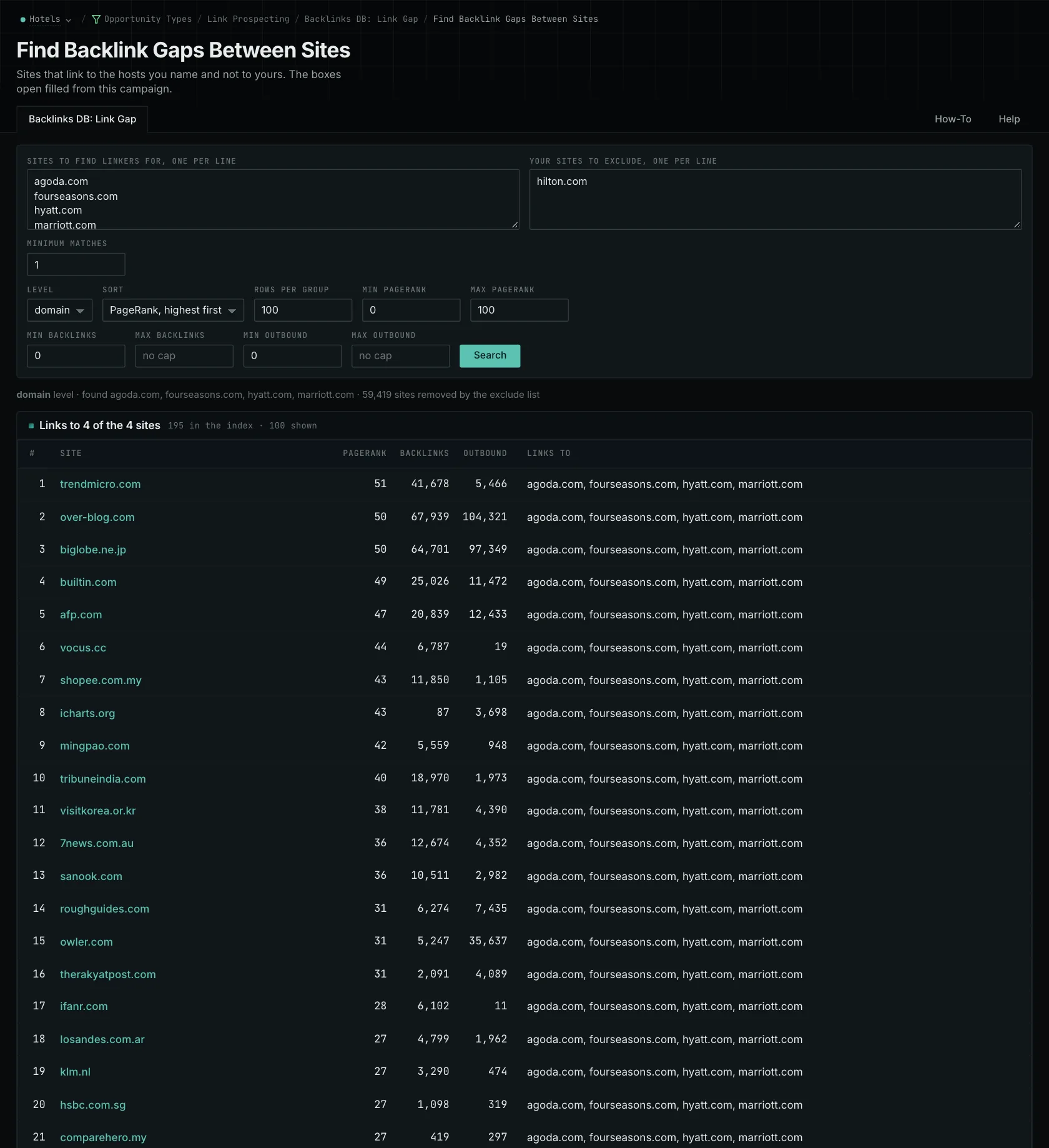
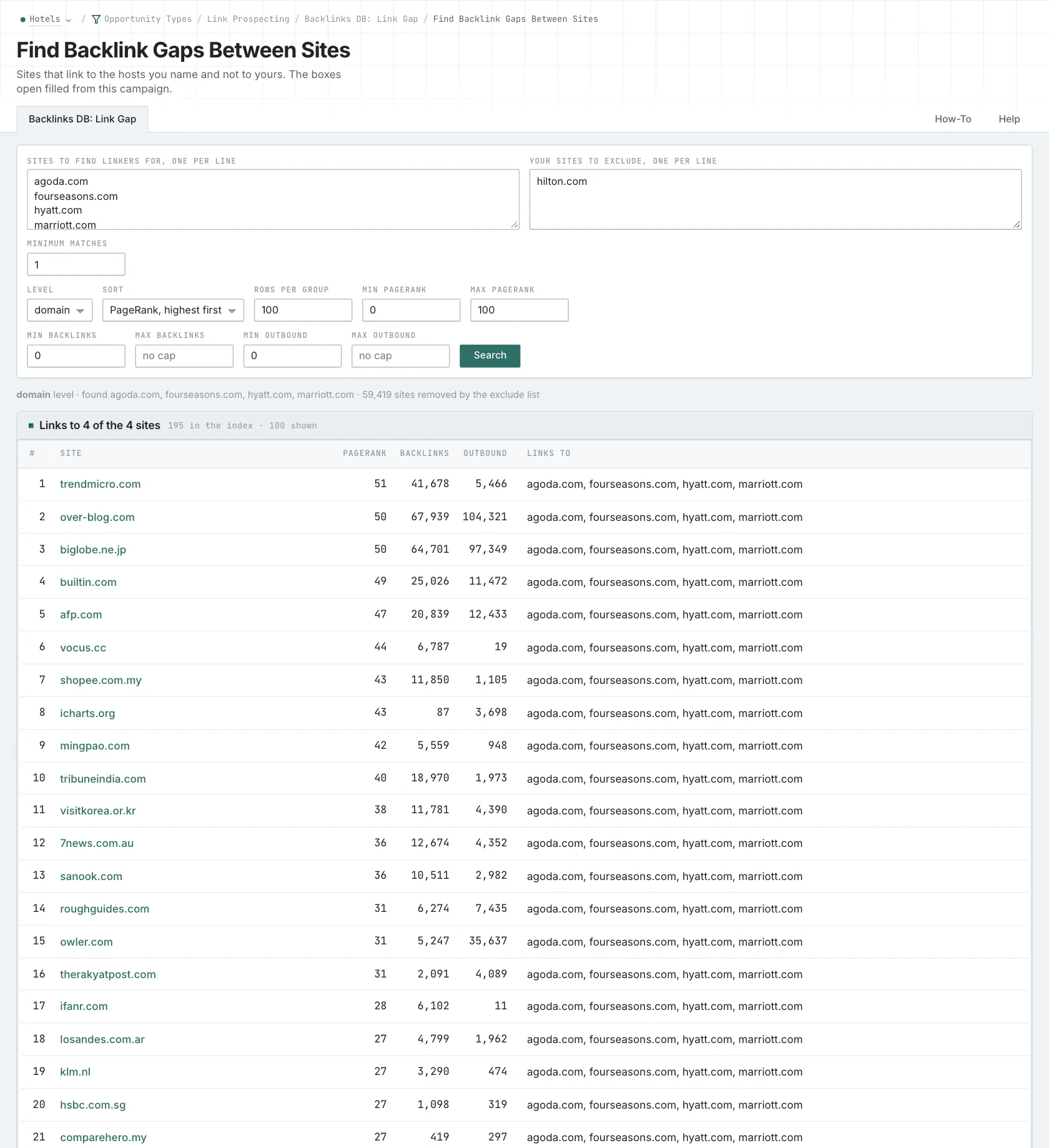
Imagine you find a page linking to three of your four competitors. You open it and discover a software vendor's directory of certified partners. Those multiple matches gave you a reason to look. The page explains the next question: can you qualify for that program?
Find out what it takes to qualify
Read the terms. An integration, agreement, or fee may be required. Bring those requirements to whoever handles partnerships so they can assess the obligations and benefits. If you already qualify and the listing is simply missing, check the application or correction process.
A trade article needs a different approach. Read what the author covered and decide whether you have information that belongs there. A resource list might accept suggestions under specific criteria. In each case, the page tells you what work the gap could lead to.
Check the links on the current page before contacting anyone. An observed link was present in collected data; it may have changed since then. And if the report has no observed link to your business, that doesn't prove there isn't one elsewhere.
This comparison can only find relationships involving your selected competitors. A relevant publication with no observed link to them won't appear. Use opportunity-type searches to find contribution pages, directories, and other candidates beyond that set.
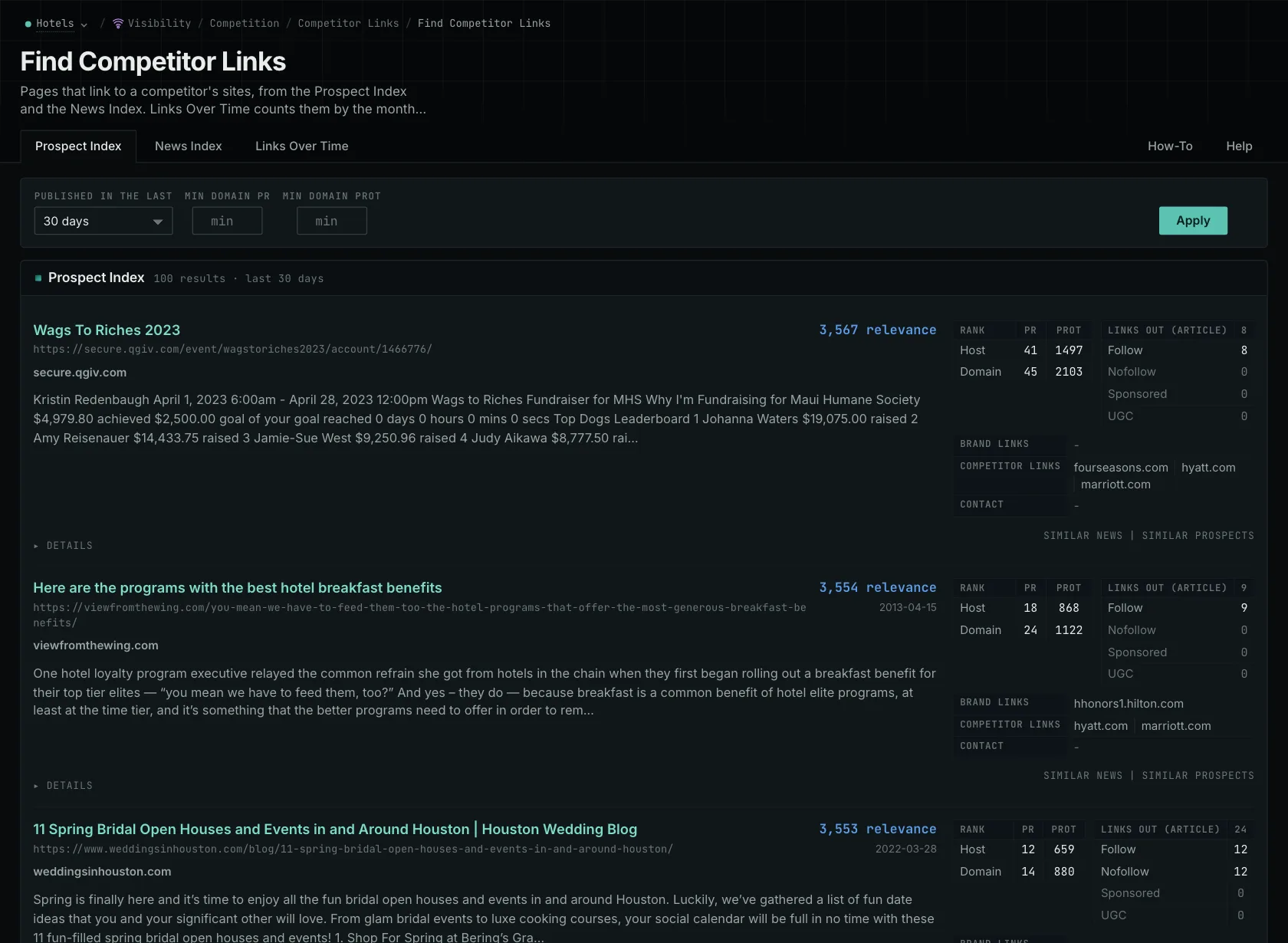
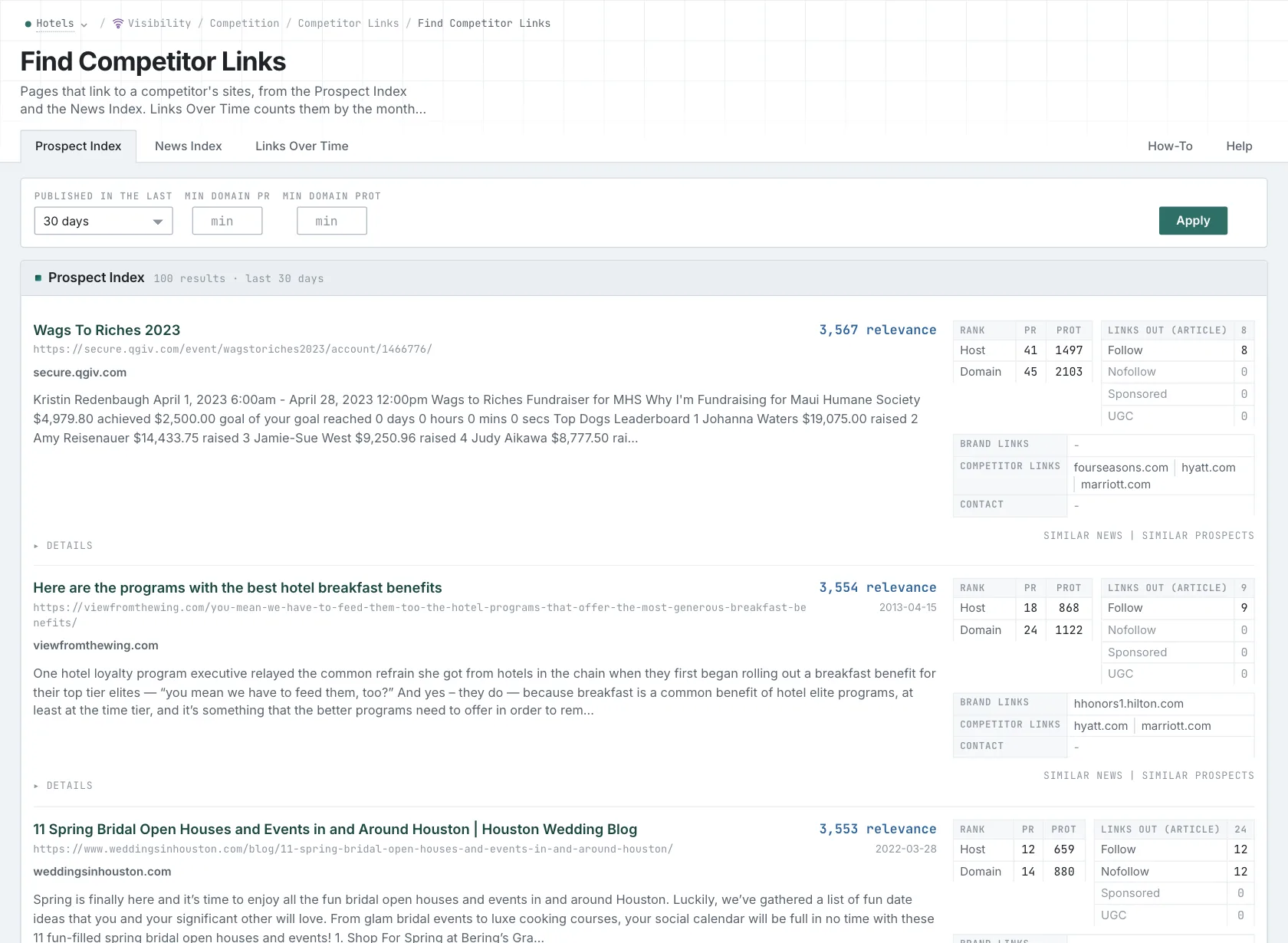
Read the pattern across competitor link sources
Look for patterns as you read. Several association directories may be a reason to review membership opportunities. Several articles citing the same research release may give you a reason to examine what that research offered the writers.
Check the dates before connecting those articles. Being collected together doesn't mean they were published together. Similar publication dates may point to one announcement, but read the subjects before concluding that a coordinated campaign produced the coverage.
Some links come from events you can't reproduce through outreach. Asking for a link won't recreate a competitor's funding announcement. You might still discover that the same publication covers research your business could contribute. Learn why it provided coverage, then assess what you can offer.
For that partner directory, first decide whether qualifying is possible and worth the work. Then pursue the listing.
Related reading: how competitor selection changes the result, the report itself, reading the pattern across results.
See how OppAlerts fits your work.
Tell me what you are working on and what you need to find out. I can walk you through the relevant reports and explain what OppAlerts can help you do.
You can explore the demo first, or use this form to ask about a task or arrange a demonstration with me.