Imagine someone asks an AI service about a problem your business solves. The answer might introduce products, compare them, and link to sources. AI search visibility research looks at how your business appears in those answers. It helps you understand what a potential customer could read before ever reaching your site.
Finding your name is just the start. The answer might recommend your product, describe it as an expensive alternative, or explain why it doesn't meet the buyer's needs. Your brand appears in all three cases, but what the reader learns is very different.
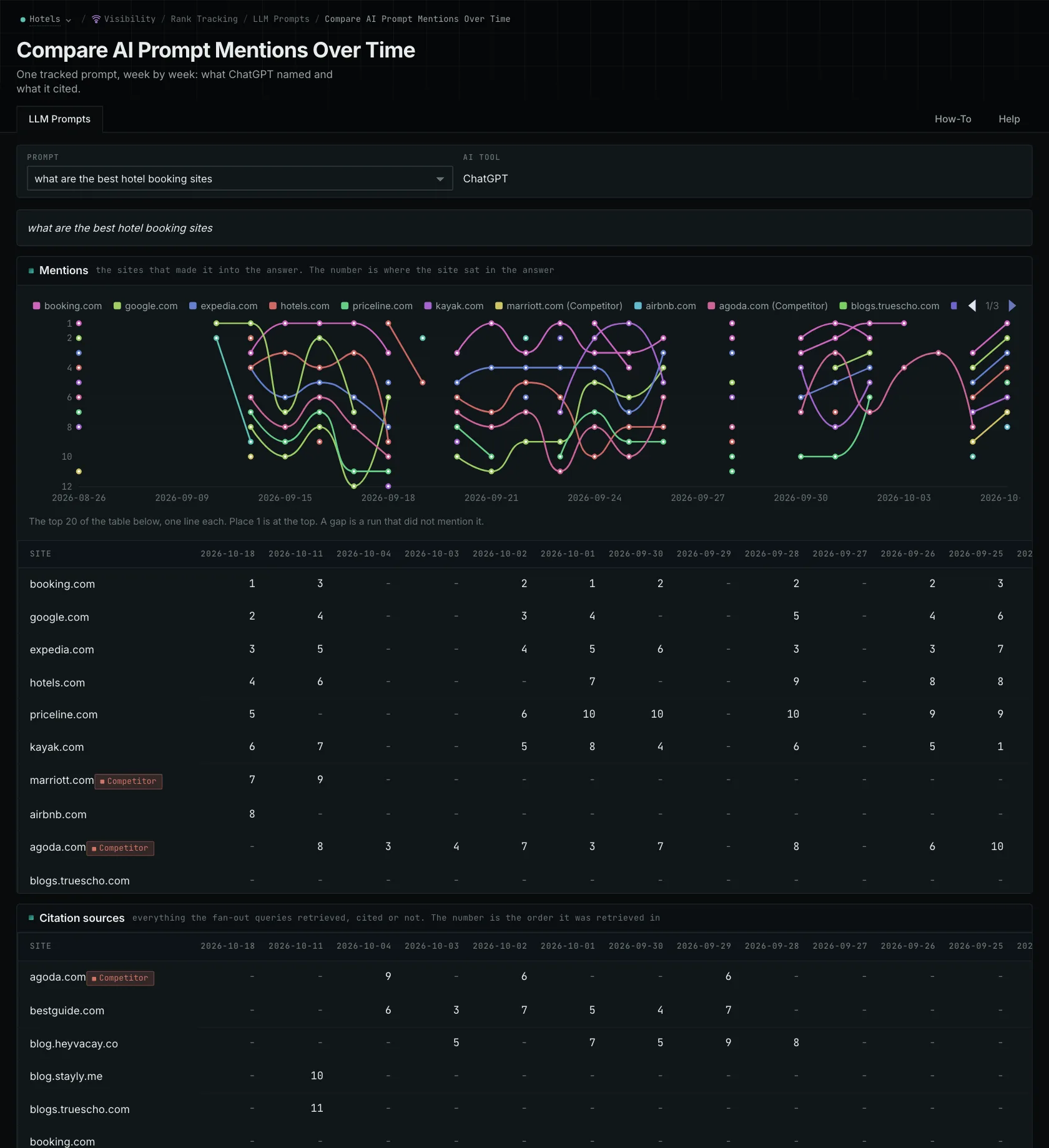
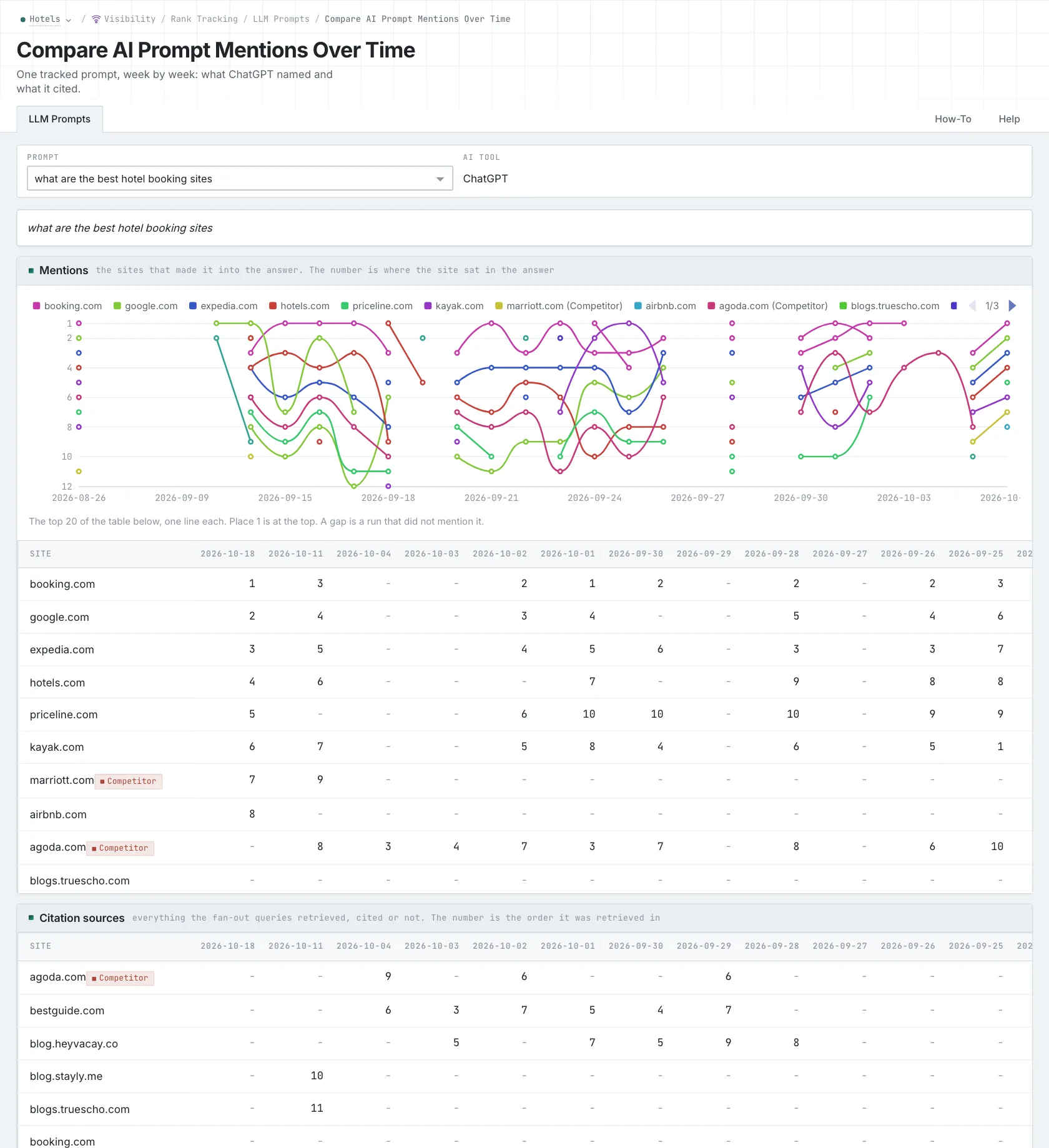
Read the answer behind the number
A stored response shows what the service returned for a particular input and collection. You can read the wording, see which brands and sources appear, and compare those details over time. You can't see every internal step that produced the response, even if the provider documents parts of the general process.
Keep that in mind when a report says “rank.” Organic search results form an ordered list. An AI answer might be prose with no list at all. If it does list your business third, that position belongs to that answer. It doesn't mean every person asking the question will get you in third place.
Even with the same prompt, the wording, retrieved material, and named options can change. The guide to answer variability explains why you need a series of observations. That lets you see how regularly something happens while still reading what each answer actually says.
Show what you're comparing
For example, you might report that your brand appeared in seven of ten successful collections over a month. Give the prompt, provider, period, and total number of collections, and someone else can understand the count. Saying only that your brand “appears in ChatGPT” leaves all of that unclear.
Compare competitors within the same collected questions, providers, and period. Otherwise, a difference in the totals could come from a difference in what you measured. When you compare periods, keep the sample sizes visible and read the wording as well as the counts.
Citations add another piece. An answer could recommend your brand while linking to an independent publication. It could also cite your educational guide without recommending your product. Understanding citations and mentions helps you work out whose page to investigate.
Use the finding to decide what to research
Suppose your product is missing from answers about software for small accountancy firms. First, check whether those questions describe buyers you actually serve. If they do, read the recommended alternatives and why they were chosen. You might meet a requirement but explain it poorly. Or you might not meet it at all.
Then read the cited pages. An independent comparison could have an outdated specification, giving you something to verify and a publisher to contact. Another list might cover only products with a feature you don't offer. The same missing mention could lead you to request a correction, improve your own explanation, or decide you don't qualify for inclusion.
None of those actions guarantees that an assistant will name your business next time. Tracking also doesn't attribute visits or revenue. A reader could finish with the answer, or visit later through another route. Visibility and traffic explains what evidence you need for each measurement.
Start with answers you have time to read
Use buyer research to choose an initial set of questions, including questions about your brand. Keep it small enough that you can inspect the answers. The prompt-selection guide shows how to turn buying situations into that set.
As you review the answers, be specific about what you found: an inaccurate description, a cited guide worth reading, or a buyer requirement you need to investigate. Then you can explain the work by showing the question, answer, and source that led to it. AEO, GEO, and SEO may be the names you use for the project. These observations give you something concrete to assess.
See how OppAlerts fits your work.
Tell me what you are working on and what you need to find out. I can walk you through the relevant reports and explain what OppAlerts can help you do.
You can explore the demo first, or use this form to ask about a task or arrange a demonstration with me.