An AI answer can recommend your business using information from somebody else's website. To understand what's happening, you need to separate the business being discussed from the source being cited. That tells you which page to investigate when you want to improve the information.
Imagine an answer recommends your project-management product and links to a comparison in a trade publication. Your product got the recommendation. The publication got the citation. Editing your product page won't directly change what that comparison says.
Understand the three things an answer can do
A mention means the answer names the brand. The sentence could recommend it, compare it with another option, or explain why it doesn't meet the buyer's needs. A recommendation is more specific: the answer presents the brand as suitable for the conditions in the question.
A citation points to a reference presented as a source for the answer. It could be your page or someone else's. The answer could even cite a page as an example of a poor option. The link alone doesn't tell you that the answer endorses it.
The reverse can happen too. Your educational guide could be cited in an answer that recommends other companies. If someone asks how a process works, your explanation may answer their question without giving the service a reason to recommend your product.
Read what the cited page actually says
Go back to the project-management comparison and open the source. If it gives an outdated specification for your product, verify the statement. If it's wrong, you have a basis for requesting a correction. A supported opinion is different. Disagreeing with the conclusion doesn't make it a factual error.
If your product is missing entirely, read how the publisher chose the entries. A roundup might include only products the author tested. A resource list might accept submissions that meet particular criteria. Those rules tell you whether you should ask for an addition and what you'd need to provide.
The citation gives you a place to start. Reading the page helps you decide what to do: request a correction you can support, prepare a submission that qualifies, improve your own explanation, or leave an accurate account as it is.
Be clear about what the citation tells you
A cited page is a reference shown in that collected answer. It isn't necessarily a complete record of everything the service consulted. And seeing it once doesn't establish that the source will appear again in later answers.
It also doesn't tell you that anyone visited your site. The answer may already explain everything the reader wanted to know. To measure traffic or commercial results, you need evidence beyond the citation record.
Keep the recorded answer with the page you're investigating. If someone reviews your correction request, they should be able to see why you chose that source, what the publisher currently says, and what supports your request. Without the answer, that first part can be hard to reconstruct.
Find out what your visibility report counts
A single percentage can hide the differences that matter here. Check whether the report separates mentions from citations, identifies the domain that received the citation, and tells you how many collected answers the figures cover.
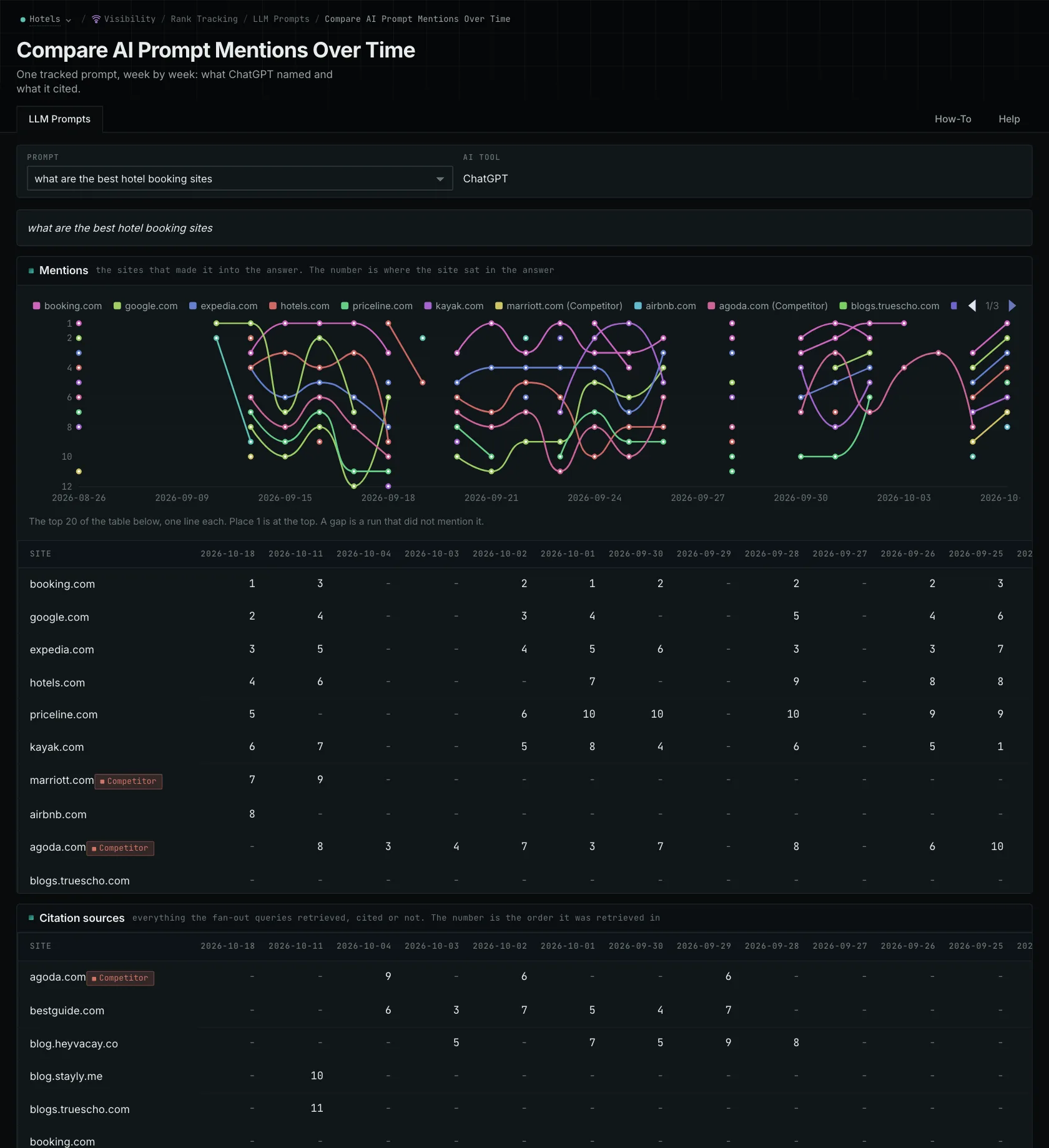
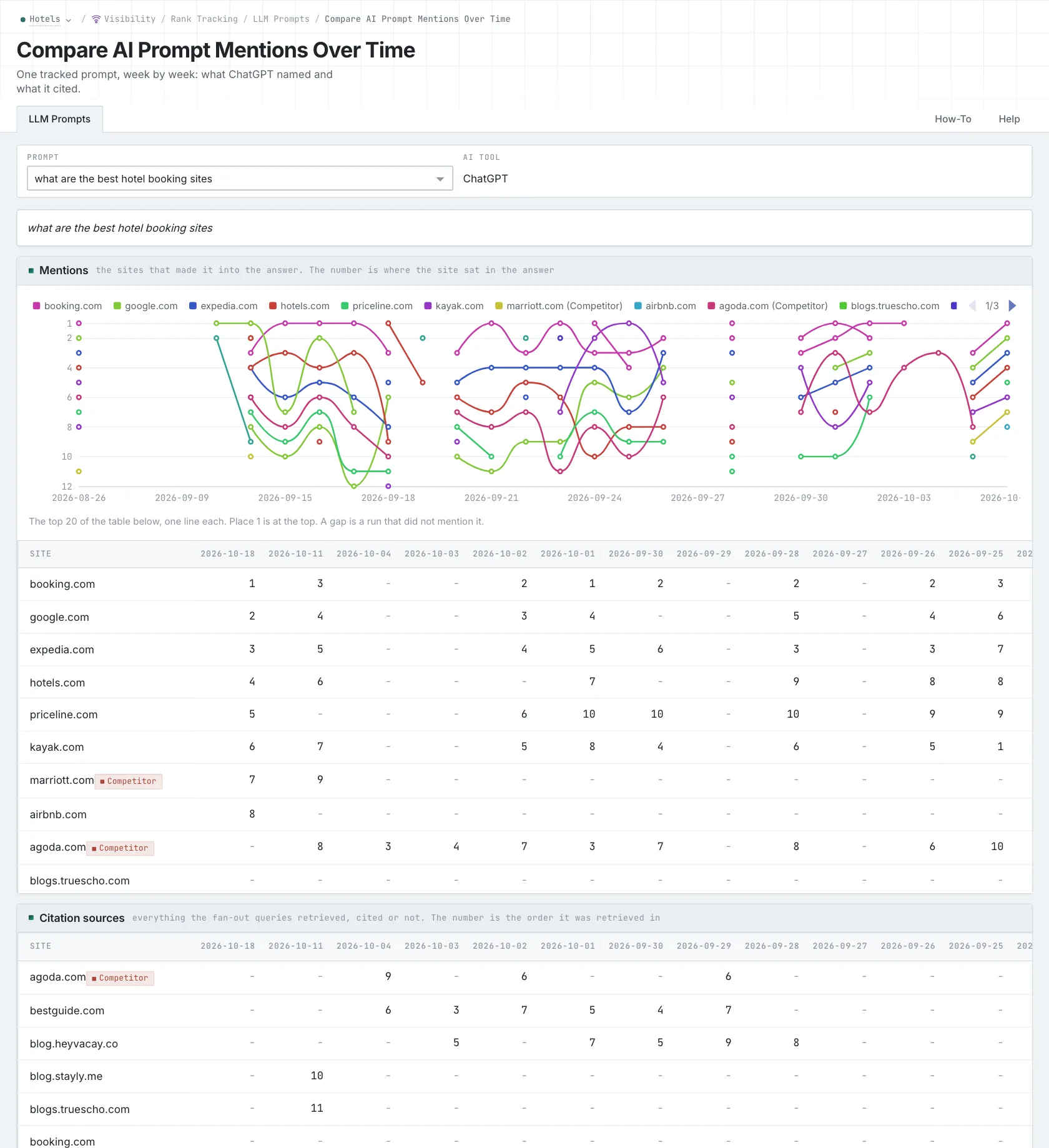
In the example at the start, a mention count wouldn't show you the publication supplying the description. Following the citation lets you read that information and decide what, if anything, is wrong or missing. Then you can choose an action that fits what you found.
AI Answer Sources shows the available source records. For the research process, follow the citation-research walkthrough. For definitions to use when comparing reports, read the AI visibility glossary.
See how OppAlerts fits your work.
Tell me what you are working on and what you need to find out. I can walk you through the relevant reports and explain what OppAlerts can help you do.
You can explore the demo first, or use this form to ask about a task or arrange a demonstration with me.