Ask an AI service the same question more than once, and you can get different answers. A single manual check won't show you that variation. Tracking over time helps you see it, which matters when you're trying to decide whether your business's visibility has improved or declined.
Imagine your brand appears in Monday's answer to a buying question and is missing on Friday. It's natural to look for something that happened between those dates. But first, be clear about what those two answers actually tell you.
Understand what could have changed
The generated wording can change even when the input stays the same. Depending on the system and its settings, the calculations and choices involved in generating text can produce different examples, names, or ordering. If the service uses search, changes in what it retrieves can also change the information available for its answer.
Your question may also leave room for different interpretations. “Best project management tools for small teams” doesn't say how small the team is or what it does. A two-person consultancy and a twenty-person department could reasonably get different recommendations.
The service itself can change through a model update, a change to retrieval, or a new answer format. Your content and your competitors' content can change too. Seeing your brand on Monday and missing it on Friday doesn't tell you which of those things caused the difference.
Look for patterns across the answers
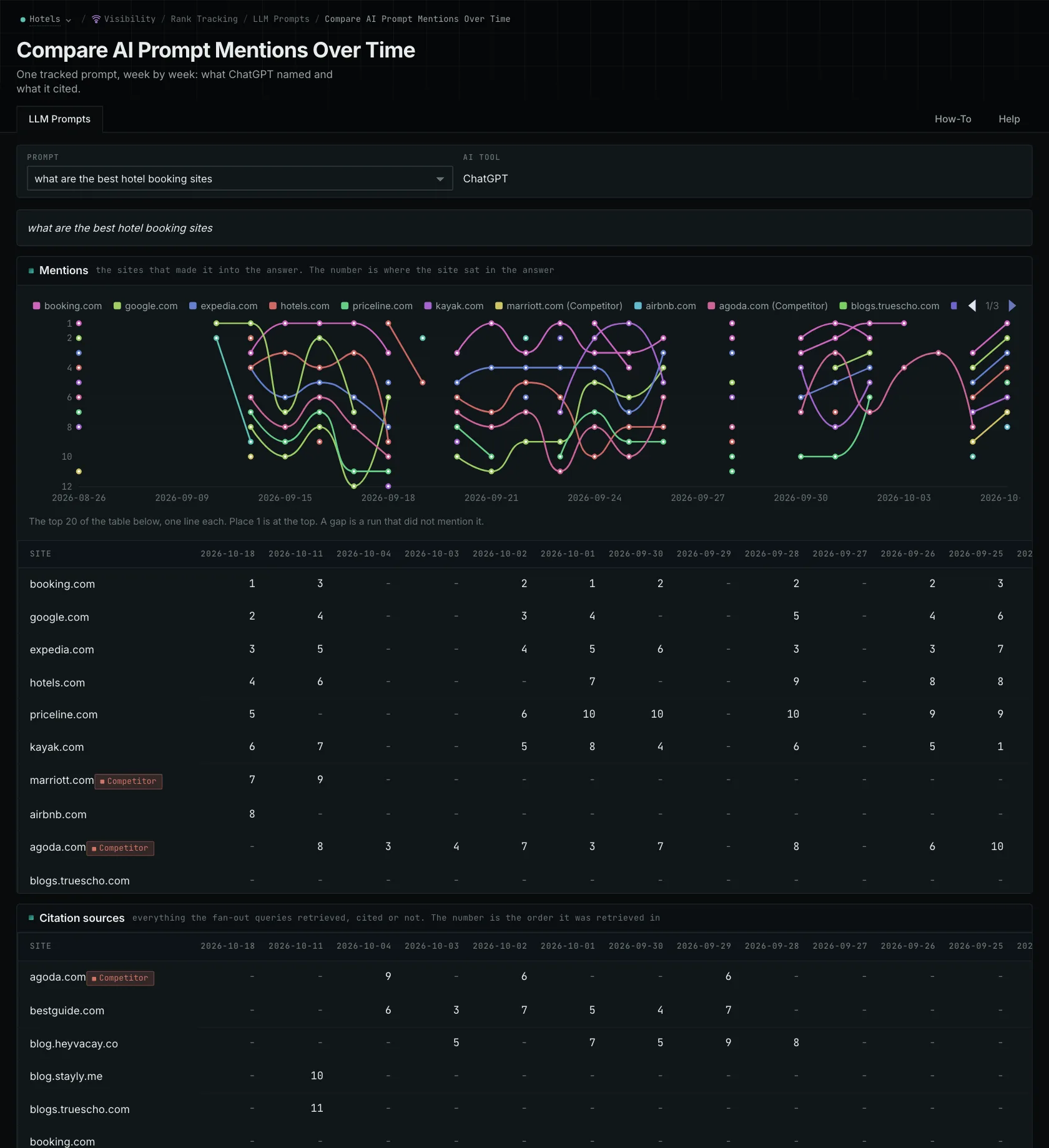
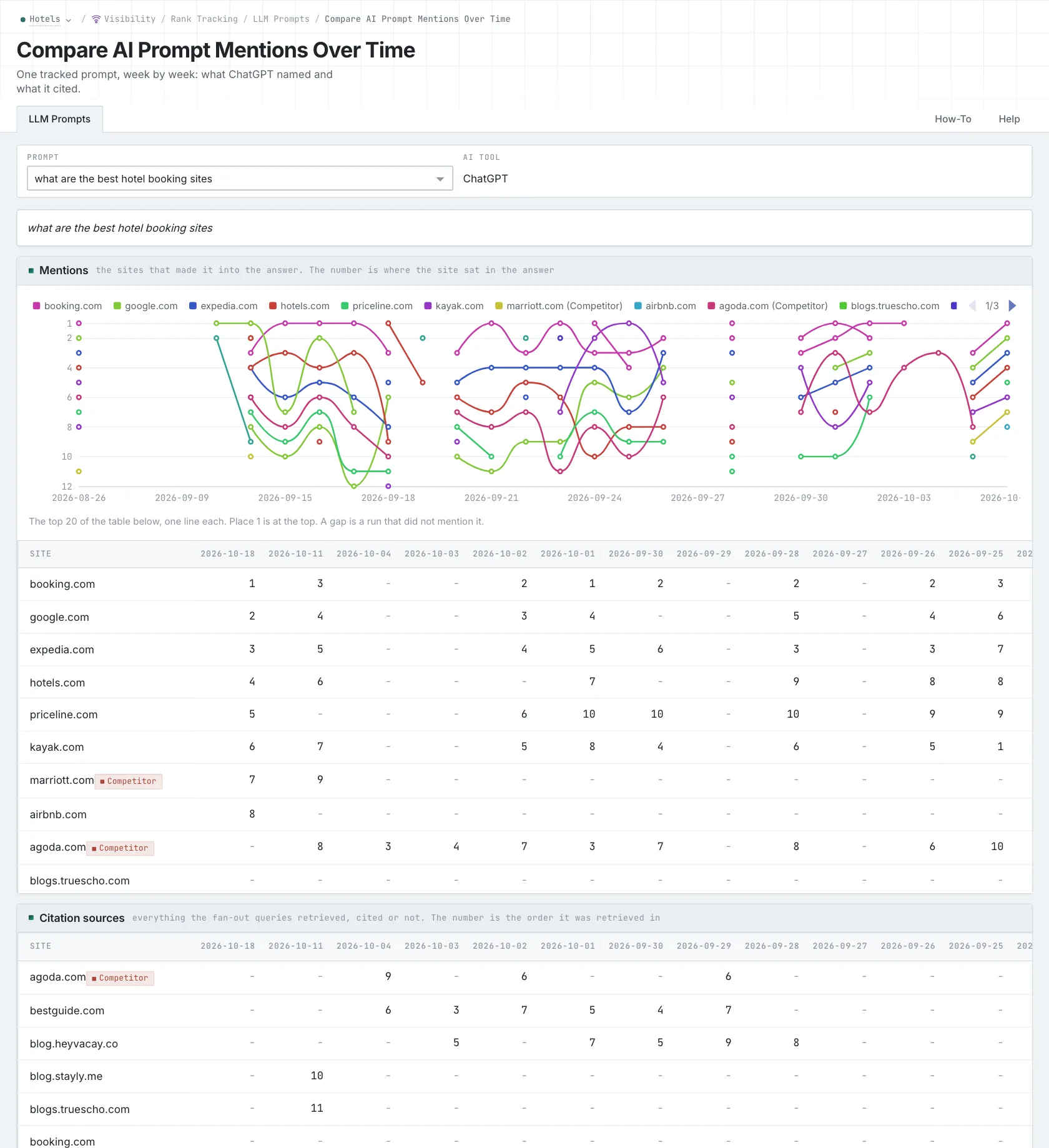
If Monday's answer lists your brand third, you can report that it appeared third in that answer. That doesn't mean every user gets the same list. With a longer series, you can measure how often your brand appeared in the answers collected for that question and provider.
For example, imagine you appeared in two of ten March collections and seven of ten July collections. Those are different observed rates. To understand them, you need the period and the number of successful collections. The numbers describe the sample you collected and how it varied. They don't prove why the rate changed.
Read how competitors appear in those same answers. Did the response favor a different type of product? Did it describe your brand differently? That gives you a more useful comparison than taking your count from one question set and a competitor's count from another.
Keep track of changes you make
Keep the prompt wording stable while you're investigating changes over time. If you add the team's size or purchasing requirements, record the edit so you can separate answers to the old question from answers to the new one. Include any known changes to the service or collection conditions in that review.
Use a set of relevant buying questions to explore decisions that one broad prompt can't cover. Then read the answers across dates. An isolated absence doesn't automatically give you a new problem to fix.
Check how the tracker collects answers
A report with one answer per collection gives you different evidence from a report combining several runs. Ask how often each prompt runs and whether you're looking at an individual response or an aggregate. The competitor pricing pages researched for these guides didn't establish that method, so you'll need to ask the supplier directly.
OppAlerts runs each prompt once per provider per scheduled collection and stores that answer. Each row is one observation in a longer series. So when you look at Monday and Friday, read the answers around them too. You may find the omission keeps happening, or that those two answers were unusual for the period.
That lets you explain what changed in the collected sample and which possible causes you need to investigate. Read the collection methodology, prompt-selection guide, and discussion of tracking's usefulness for more on those decisions.
See how OppAlerts fits your work.
Tell me what you are working on and what you need to find out. I can walk you through the relevant reports and explain what OppAlerts can help you do.
You can explore the demo first, or use this form to ask about a task or arrange a demonstration with me.