Competitor Mentions and Competitor Links show you where competing businesses appear in the collected coverage. You can find publications that cover your market, see how competitors are described, and look for relationships your own business could build.
Imagine a competitor appears in a product roundup, a partner announcement, and an association directory. Each gives you something different to investigate: how the author chose the products, what the partnership involves, and how a business qualifies for the directory.
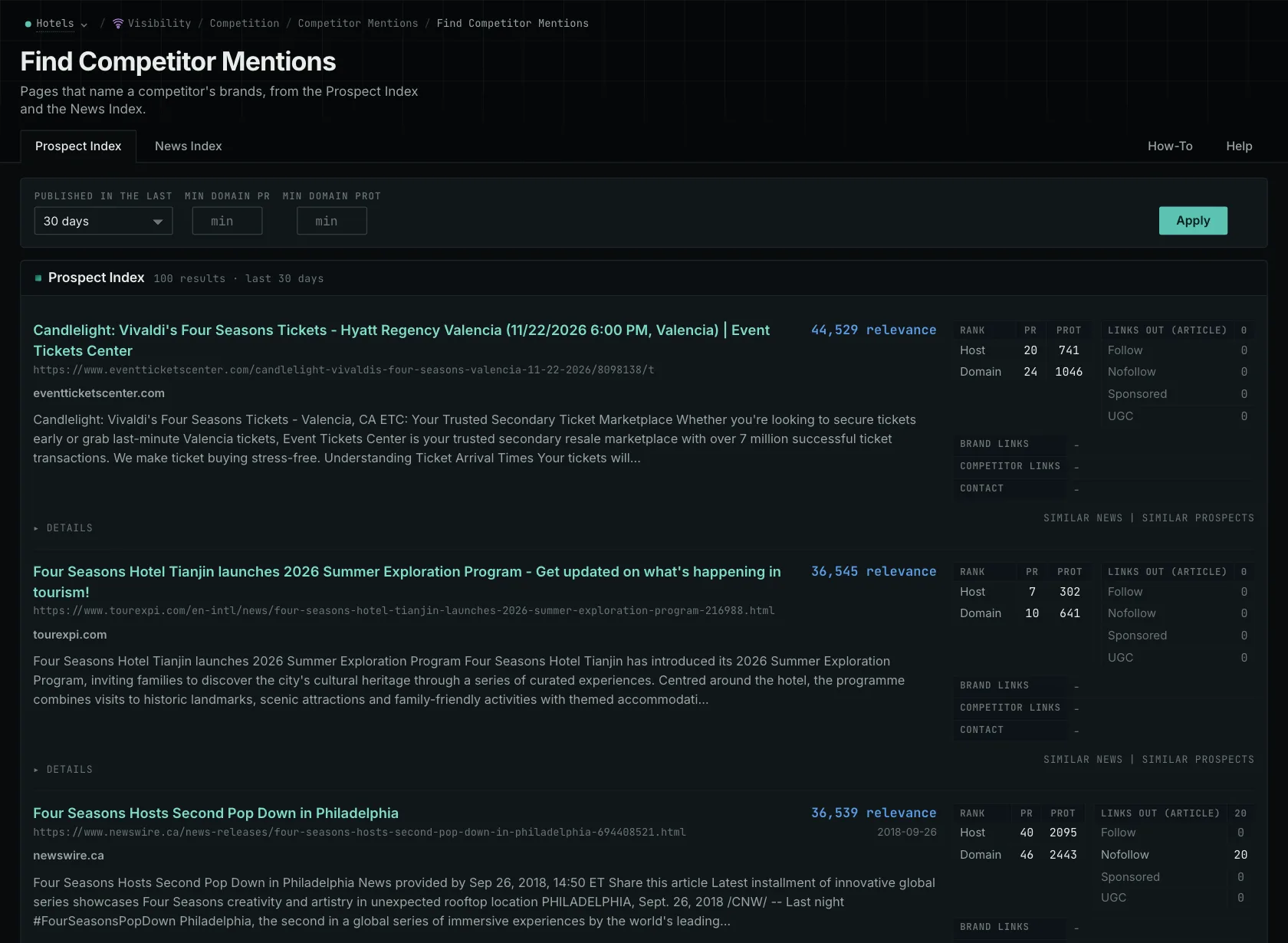
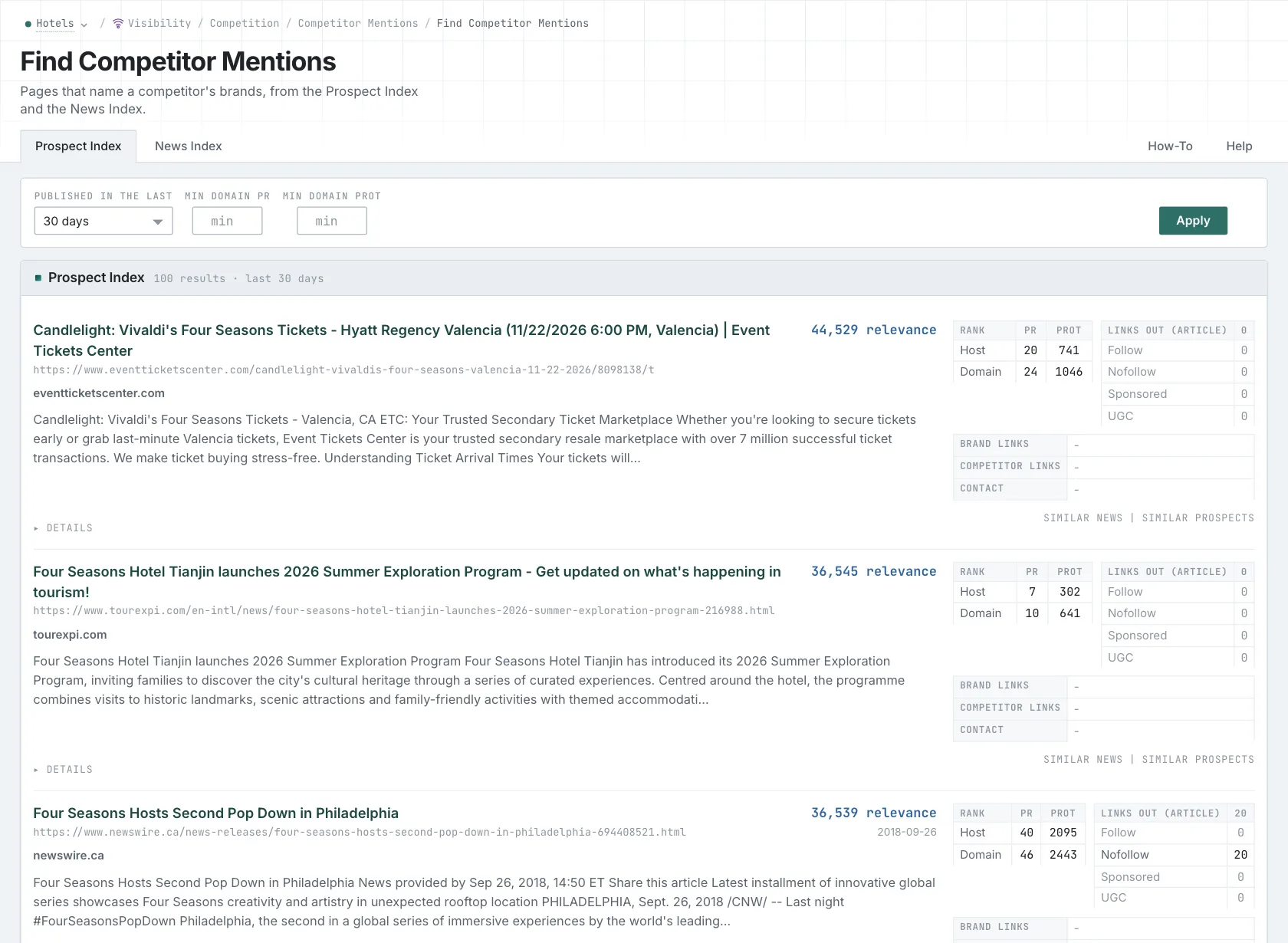
Choose the businesses you want to follow
Add the businesses as Competitors in your campaign, using their specific names and hosts. A publication that reviews your market should be labeled Publisher. If you label it as a competitor, links to its reviews can enter the competitor report, changing what you're comparing.
Use the News Index for recent coverage and the Prospect Index for the broader stored collection. Open the source pages when you need more context than the result provides.
Find out how your competitors got included
Start with the product roundup and look at its audience. If it compares systems for large restaurant groups and your product serves independent restaurants, the page may be aimed at a different buyer. That helps you decide where to spend your outreach time.
If the audience does fit, read the selection criteria and check whether the article is still maintained. Perhaps it explains payroll integrations but leaves out shift swapping, which your product handles well. You can show the author a specific addition that would help their readers, with evidence of how it works.
For the partner announcement, look at the integration or agreement behind it. Decide whether a similar relationship would make sense for your business. For the directory, read the membership requirements and find out whether you qualify. The next step depends on why the competitor is there.
Look for sources that appear across several competitors too. Share what you find with the people handling content, PR, and partnerships, so each opportunity goes to the team that can act on it.
Find places where your business is missing
Use Brand Link Gap to find indexed pages with competitor links where no link to your tracked sites was found. Backlinks DB: Link Gap compares referring sites in the backlink collection. They use different data and return different kinds of results, so you can use both in your research.
The coverage shows what was published. You'll need to investigate further to learn about fees, private agreements, or business results. Start with the source page and use what it says to decide whether to propose an article contribution, apply for membership, or explore a partnership.
Use the weekly competitor-monitoring routine to keep up with new coverage.
See how OppAlerts fits your work.
Tell me what you are working on and what you need to find out. I can walk you through the relevant reports and explain what OppAlerts can help you do.
You can explore the demo first, or use this form to ask about a task or arrange a demonstration with me.