First, decide what you mean by monitoring a competitor. You might want to follow news coverage, new links, search positions, or changes to their products and prices. Each needs different data, so start with the event you want your team to investigate.
A competitor could appear in a trade article, gain a link, and move up in search during the same week. You can research all three, but finding them together doesn't tell you the article caused the ranking change. A link you've just discovered could also be much older.
OppAlerts publishes this guide and is included in the comparison. Vendor details come from September 2026 research.
Follow mentions and links
You can monitor a competitor's name the same way you monitor your own. Brand24's researched $249 to $699 monthly plans cover 3 to 25 keywords and 2,000 to 100,000 mentions, with sentiment across languages, Demographics, and Anomaly Detection. Mention offers Boolean monitoring across web and social sources. Talkwalker and Brandwatch provide broader quoted analysis; Talkwalker states coverage of 187 languages and 196 countries.
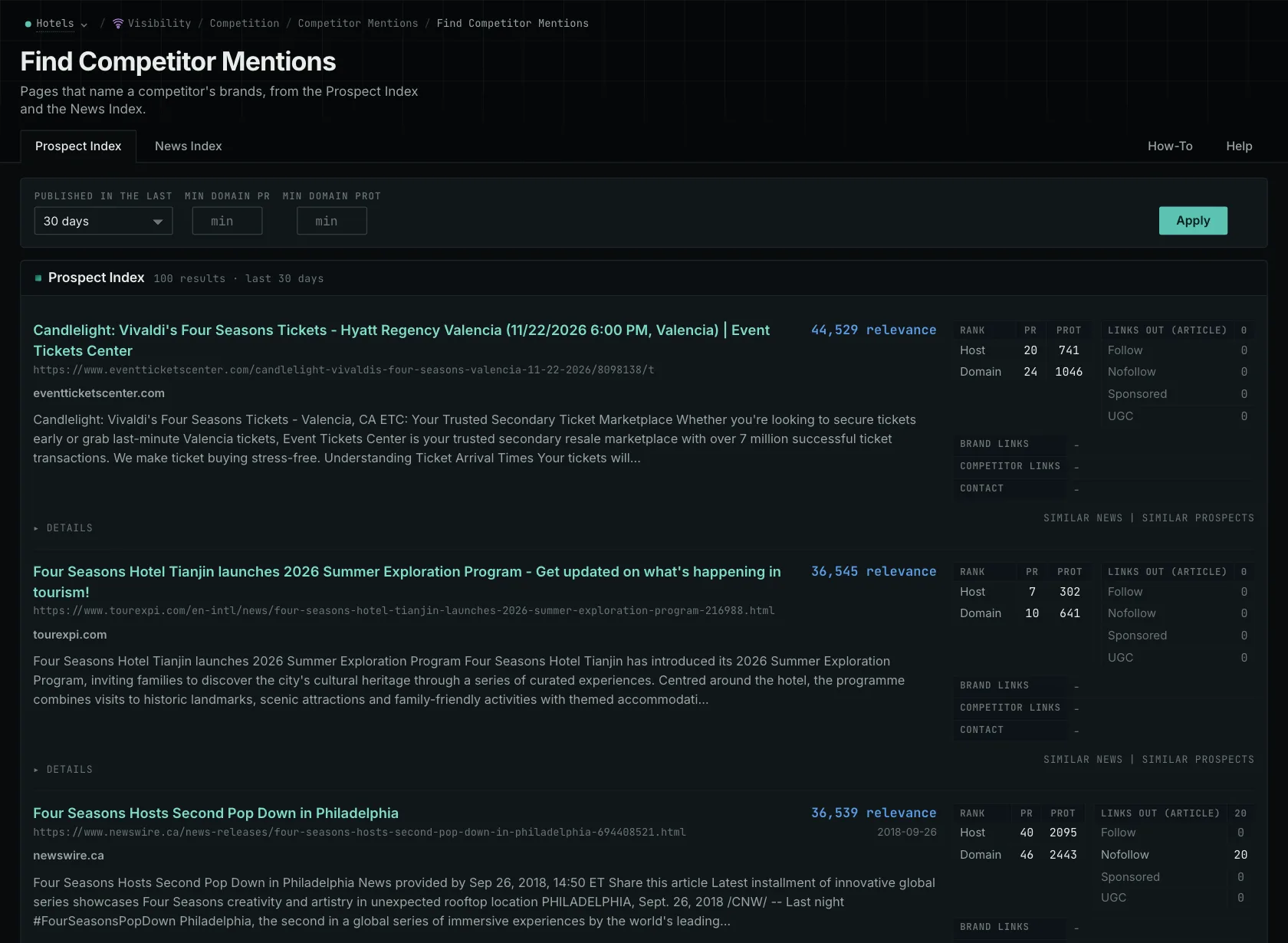
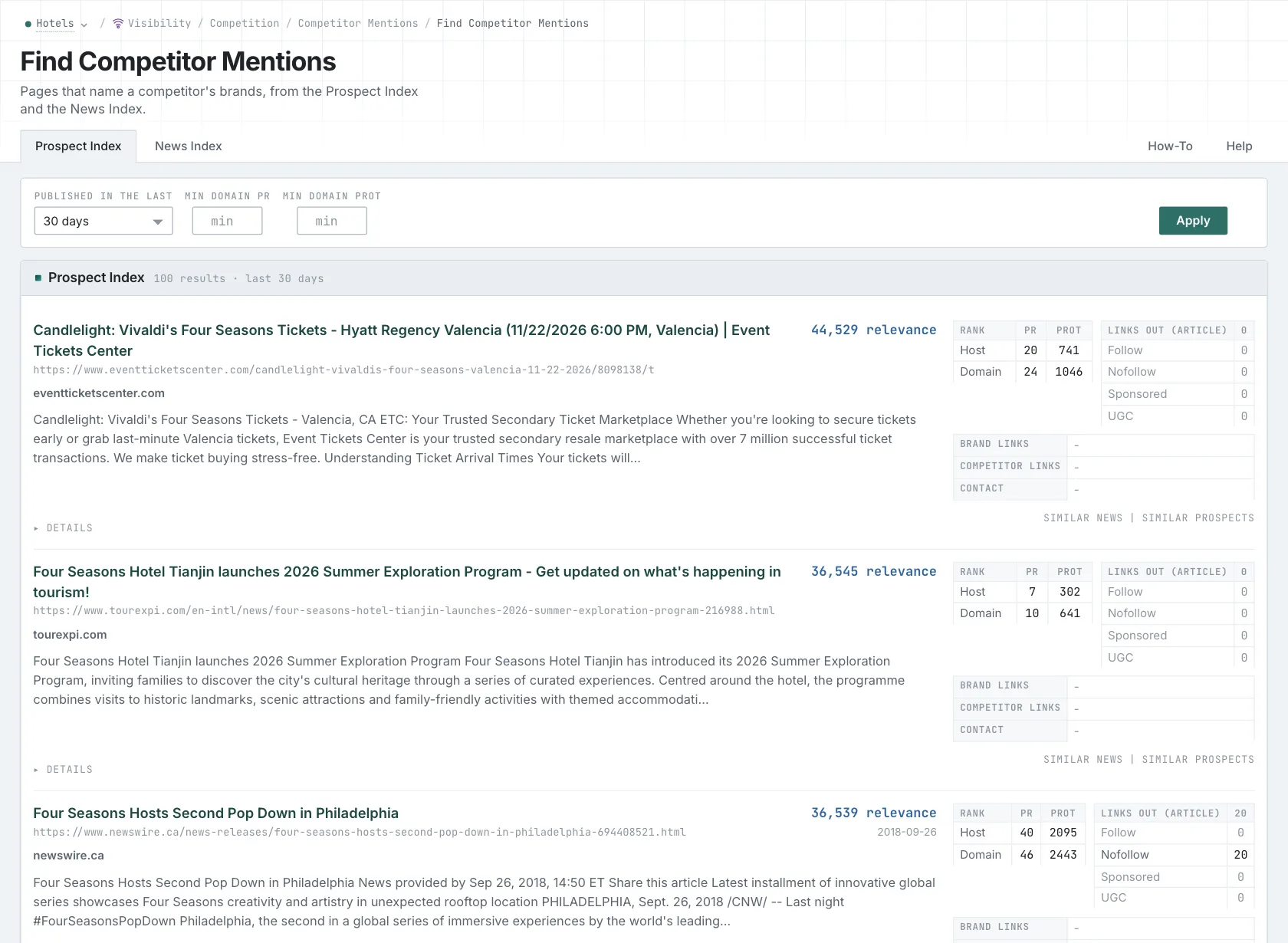
A frequently mentioned competitor can use more of your allowance without adding another search term. Check source coverage, filters, and mention limits together. OppAlerts Competitor Mentions searches its Prospect and News indexes. It doesn't monitor social-platform conversations.
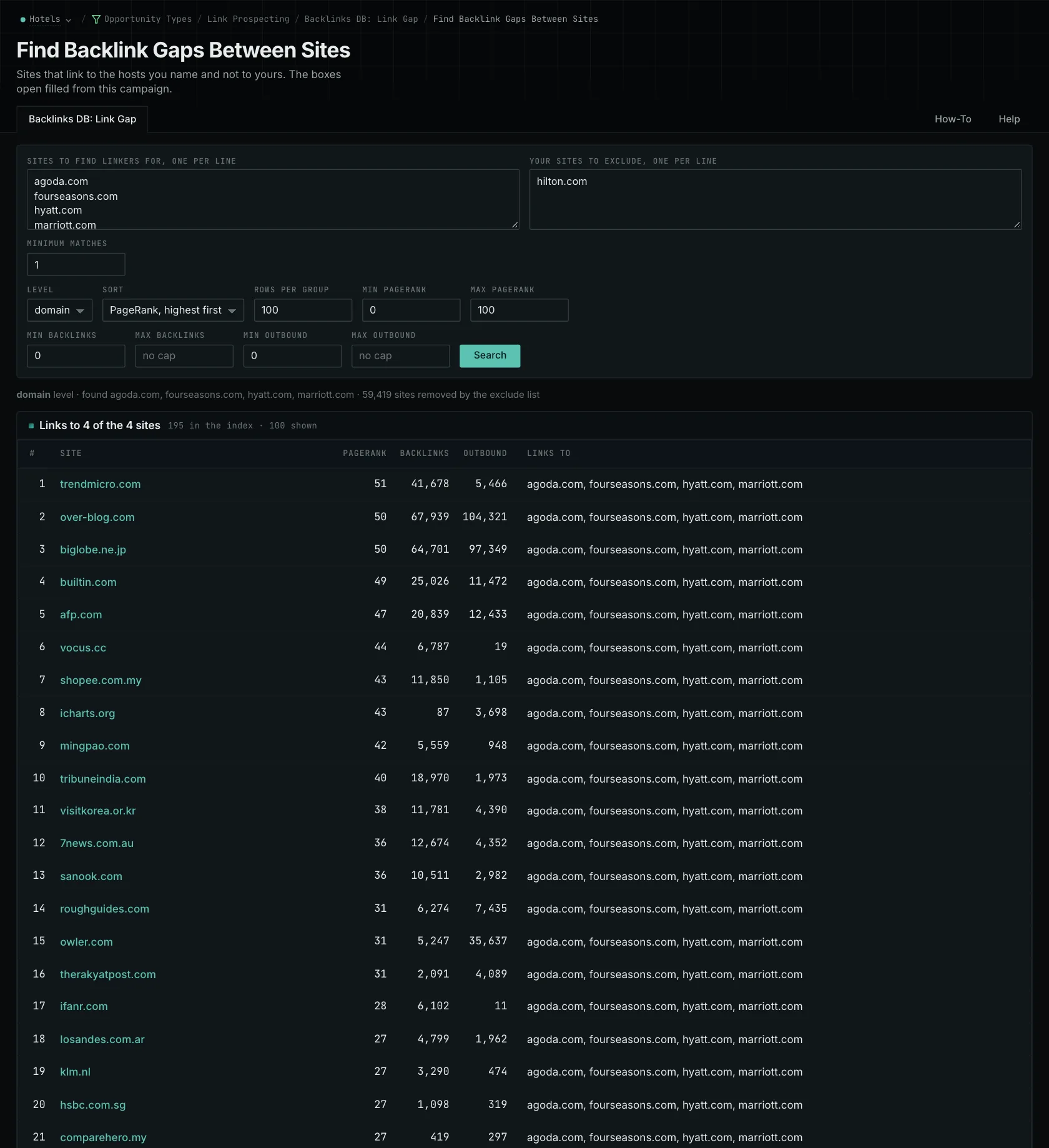
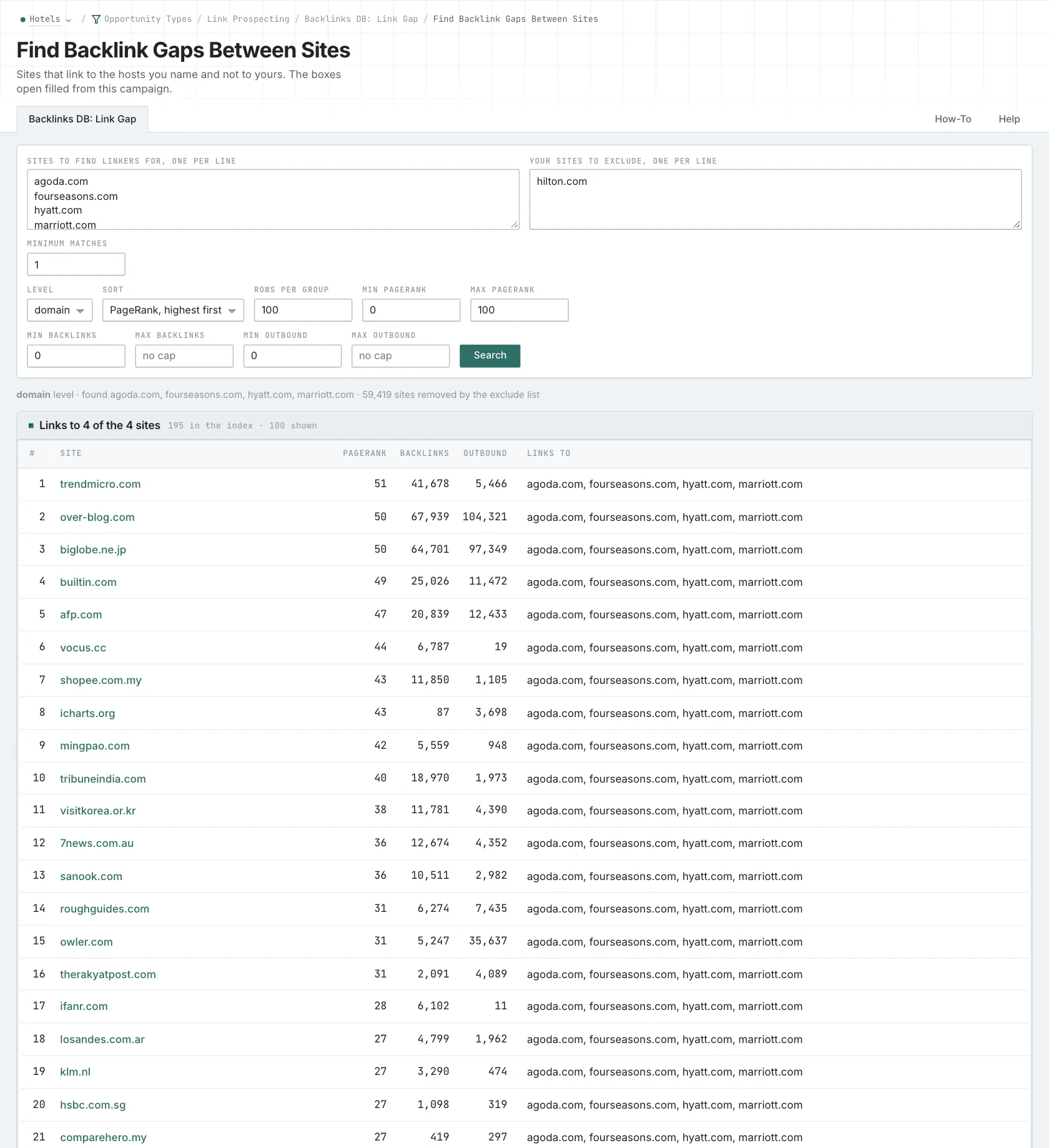
For links, Semrush, Ahrefs, and OppAlerts compare recorded competitor links with those found for your own site. Ahrefs also provides link and crawl research with six months to five years of history by plan. Majestic specifies allowances for the number of backlink records you can analyze.
Open a referring page to see whether it's a news story, an open directory, or a listing that requires membership. OppAlerts Site Info can help find published contact details, and monthly PageRank history adds context about the site. You'll still need the page to investigate why the link exists; its discovery date doesn't tell you when it was published.
Compare search results and AI answers
Semrush, SE Ranking, Ahrefs, and AccuRanker support conventional competitor rank tracking. For AI answers, Peec describes share of voice, brand attributes, and source gaps. Profound benchmarks across up to nine engines on the relevant plan; Brand24 describes nine-model LLM Listening. Scrunch Core, at $250, includes five competitors.
Choose competitors for the buyers you're researching. Five rivals might cover one market segment and miss businesses relevant to another. Check the engine names too, especially if Perplexity or Claude is required.
OppAlerts finds published pages mentioning or linking to your brand and competitors. A campaign can hold up to 100 organizations in total, including up to 10 competitors. Use those details as research context, then choose the competitors relevant to each investigation or backlink comparison.
Check how business changes are recorded
Funding, hiring, pricing, launches, and executive moves need their own research. An article about recruitment tells you something different from a record showing that a particular job listing changed. Ask the vendor to demonstrate the exact alert and details you need.
OppAlerts can find articles about those announcements, but it doesn't maintain a structured company-change database. Campaigns organize your business and organization context. Individual tools, including backlink comparisons, still use their own inputs and available records.
For our original example, keep the article, link, and search result together with their dates. Use them to decide what to investigate next. Read more about competitor reports, following published mentions, and selecting competitors for link-gap research.
Browse all comparisons and alternatives.
See how OppAlerts fits your work.
Tell me what you are working on and what you need to find out. I can walk you through the relevant reports and explain what OppAlerts can help you do.
You can explore the demo first, or use this form to ask about a task or arrange a demonstration with me.