AI search visibility tools help you see how your business appears in AI answers and which sources those answers cite. Some focus on tracking. Others help you research publishers, review content, or write drafts. Start with the questions you want to follow and what your team plans to do with the results.
Imagine an answer recommends a competitor and leaves you out. You might want to read the cited comparison, improve your product explanation, or check whether AI agents can access your site. Those are different tasks, and the tool you choose needs to help with the ones you actually do.
OppAlerts publishes this comparison and is included in it. Prices and allowances come from September 2026 research, with the stated plans and billing terms. Keep tracking your own prompts separate from searching a vendor's existing answer database when comparing offers.
Work out what you need to collect
List the engines, prompts, collection frequency, and people needing access. A weekly check of a few questions needs a different allowance from a large daily program. If you need Perplexity or Claude, choose a product that collects those answers.
For example, 100 prompts on three engines, five days a week, produce 1,500 weekly collections, or about 6,500 monthly. The same questions on one engine once a week produce 100 weekly collections. Include providers and frequency whenever you compare prompt allowances.
Ahrefs counts a standard custom check as one prompt, on one platform, in one location. The researched packages cost $50 for 2,500 checks, $100 for 7,000, and $250 for 25,000, with overages of $0.020, $0.015, and $0.010 respectively. Claude uses eight checks per update. The cost-comparison guide shows how to calculate your workload using each vendor's units.
Choose the providers you need to follow
Profound names ChatGPT, Perplexity, Claude, Gemini, Google AI Overviews, Copilot, Grok, and DeepSeek, with up to nine engines at Enterprise. Its researched Starter plan is $99 monthly billed yearly for 50 prompts on ChatGPT and one user. Growth is $399 for 100 prompts across three engines and three users. API access requires Enterprise.
Scrunch Core is listed at $250 monthly, covering ChatGPT, Perplexity, Google AI Overviews, and Copilot. It includes 125 unique prompts, one brand workspace, five users, three personas, and five competitors. Enterprise expands to nine engines. Scrunch also helps audit and serve your site to AI agents, which is relevant when you need to investigate access to your own content.
Brand24 combines brand monitoring with LLM Listening across nine named models: ChatGPT, Gemini, AI Overviews, AI Mode, Perplexity, DeepSeek, Grok, Copilot, and Claude. Researched plans run from $249 to $699 monthly with keyword and mention allowances. Unlimited users start above the entry plan. Consider it when your team also monitors social and news coverage.
Otterly.AI's reviewed self-serve plans include ChatGPT, AI Overviews, Perplexity, and Copilot. The $29, $189, and $489 monthly plans provide 15, 100, and 400 prompts. Gemini, Claude, and AI Mode cost extra. Standard and Premium support additional prompt blocks and include API and MCP access with published request allowances.
Compare schedules and answer details
Rankscale offers hourly through monthly schedules on every plan. Its example uses 162.5 monthly credits for 50 prompts checked weekly at 0.75 credits per run. Plans are $20, $99, $385, and $780 monthly, with unlimited users and unused-credit rollover up to a stated multiple. Check it if you need several observations a day during a launch.
Peec counts usage through prompts, active models, and frequency. Its researched plans include 50, 150, or 350 prompts collected daily on three chosen models. You can add models without changing plans; Enterprise supports up to twelve. Team users are unlimited.
Peec also provides prompt-volume scores, branded and intent classifications, brand attributes, source gaps, and an ads library for sponsored answer placements. Open the records behind these labels during a trial to see how they help you understand a competitor's recommendation.
Check the tools you already use
Ahrefs' AI Visibility Index starts at $199 monthly for researching brands in pre-collected answers. Custom tracking is a separate purchase from $50. Lite, Standard, and Advanced include 5, 10, and 20 daily prompts on one platform respectively. API and MCP access start with Lite.
Semrush includes 50, 100, or 200 daily prompts from its $199 Starter plan upward, alongside keyword tracking and site auditing. MCP access starts with Starter. Its Prompt Tracking documentation names ChatGPT Search, Google AI Mode, and Gemini. Check that custom tracking separately from the broader visibility database.
Surfer's AI Search Analytics combines daily tracking with Mention Gap, Brand Sentiments, and MCP. Coverage includes ChatGPT, Gemini, AI Overviews, and other models; check the current tier for your required set. If you want keyword and prompt tracking together, also compare SE Ranking and Semrush.
Choose tools for the work that follows
Profound can help turn a finding into a generated draft and CMS publication. Scrunch helps investigate how your site serves AI agents. Ahrefs Brand Radar and Semrush let you research brands you haven't configured for custom tracking. Decide which of those jobs your team needs to do next.
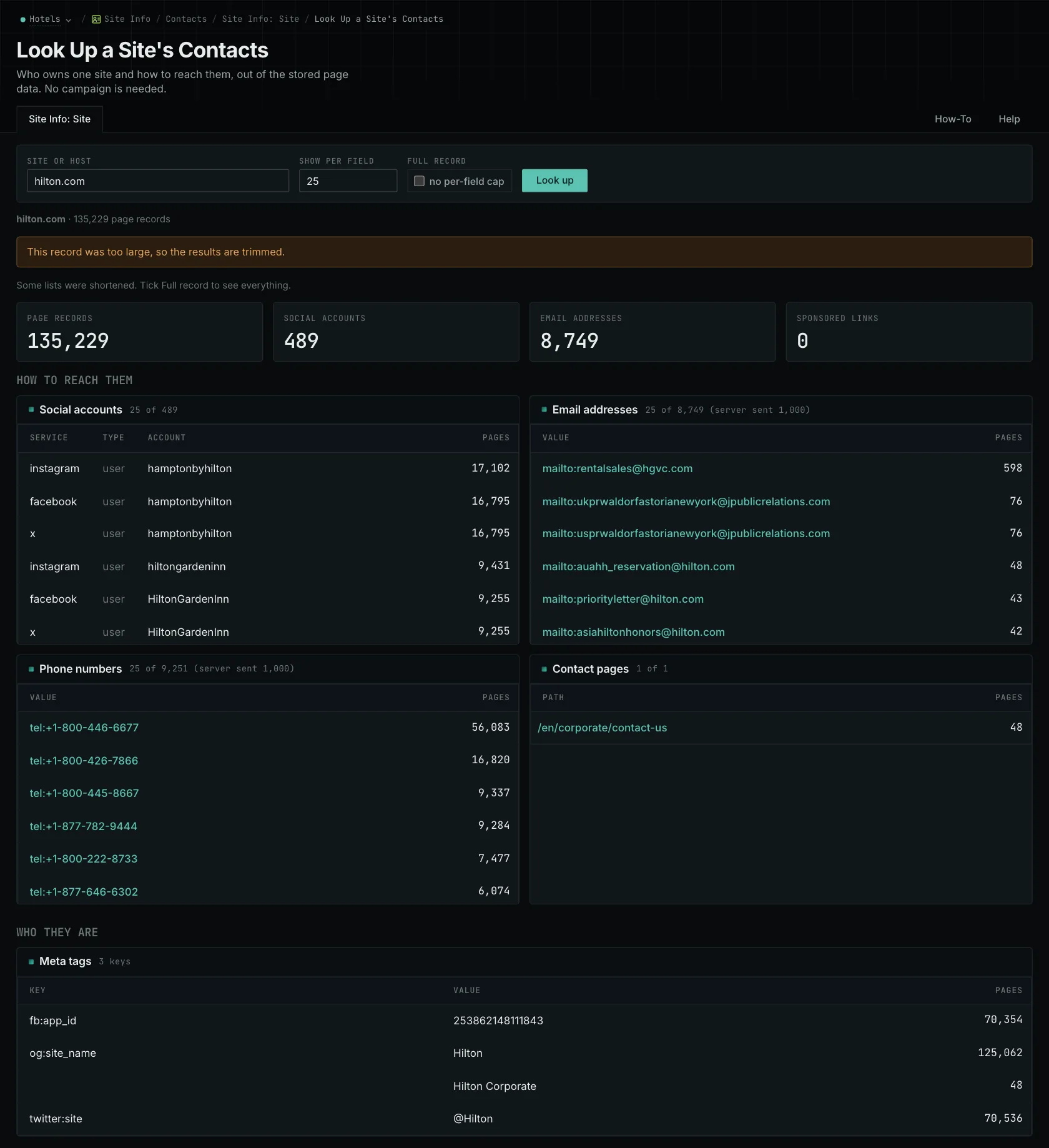
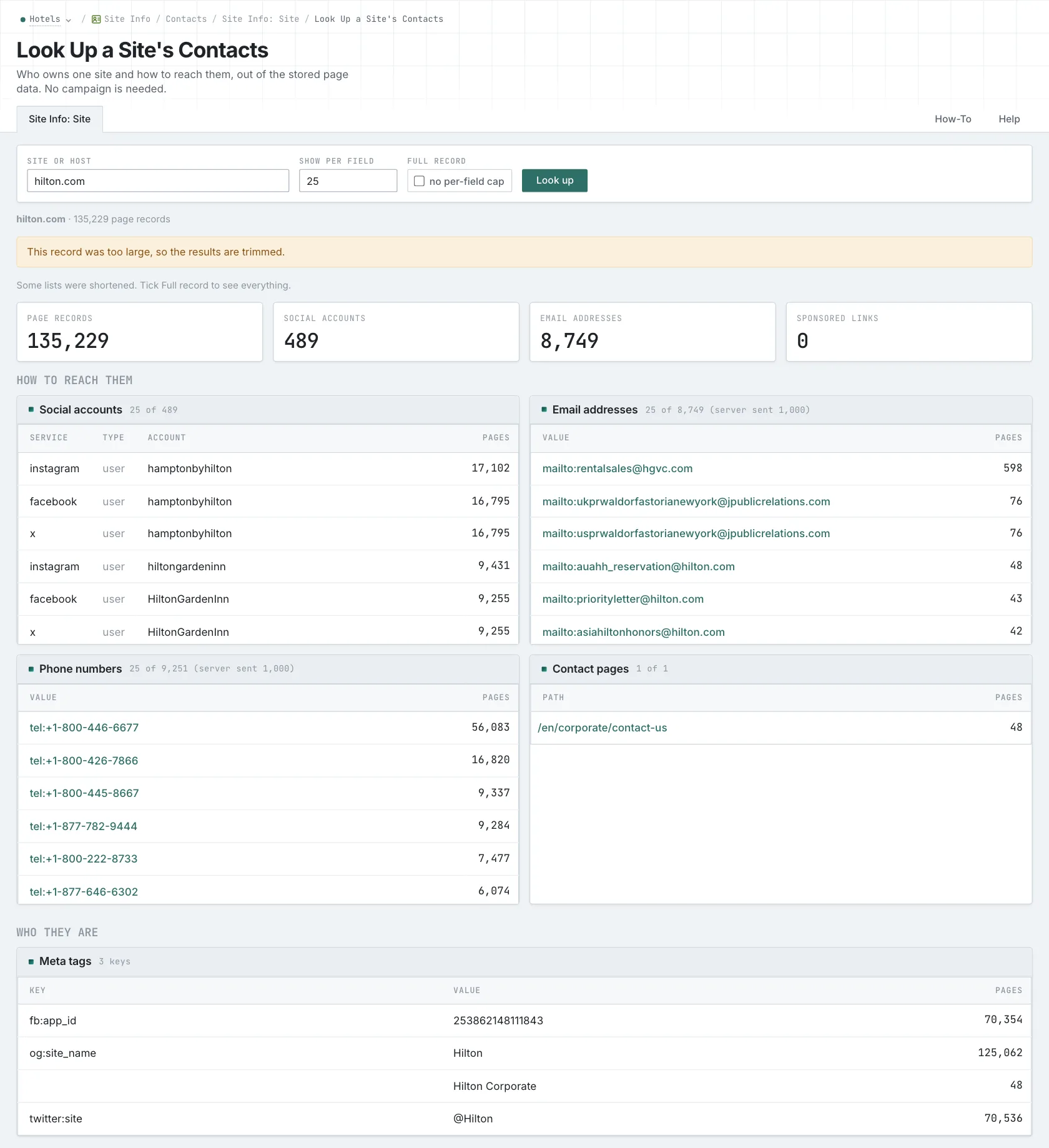
OppAlerts helps you research publishers and relevant pages. Its Prospect Index searches by meaning and opportunity type, including guest contributions, resource lists, expert roundups, podcasts, and directories. You can also research public website contacts, news and podcast coverage, backlink gaps, monthly PageRank history, and how closely your draft matches selected categories.
Campaign research shows which businesses AI models recommend, while continual monitoring finds mentions, links, and opportunities. Team access depends on your plan. API and MCP access are read-only.
Try a real research task
Go back to the competitor's citation. Imagine the restaurant-software comparison explains payroll integration but says little about sharing staff between nearby restaurants. If your product solves that problem, you can investigate whether an explanation and supporting evidence would help the author and their readers.
An OppAlerts campaign stores your business, brands, and competitors as research context. You'll still choose the search terms, sites, and content categories for each tool. Read the cited page to decide whether it presents an opportunity and check the answer's claims yourself.
OppAlerts doesn't audit your website, analyze logs, attribute AI visits, serve content to agents, generate drafts, publish pages, or verify AI statements. Other products cover some of those jobs. Check API and MCP operations too: OppAlerts is read-only, and each vendor has its own available operations and plan requirements.
Try the same questions, providers, and schedule in your finalists, then open the answers. Follow a citation into the next task your team needs to complete. That shows you what each tool helps you understand and do, beyond the summary percentages.
Compare individual tools
- OppAlerts vs. Otterly.AI
- OppAlerts vs. Peec AI
- OppAlerts vs. Profound
- OppAlerts vs. Rankscale
- OppAlerts vs. Scrunch
Browse all comparisons and alternatives.
See how OppAlerts fits your work.
Tell me what you are working on and what you need to find out. I can walk you through the relevant reports and explain what OppAlerts can help you do.
You can explore the demo first, or use this form to ask about a task or arrange a demonstration with me.