When you say you want to monitor your brand, you might mean social conversations, customer ratings, or published articles. Products use names like brand monitoring and social listening for different combinations of those things. Start with what your team needs to find and what you'll do when you find it.
A social-platform complaint and a review in a trade publication could be about the same product. One may need a quick customer-service response. The other may need a factual correction. You need different source access, timing, and follow-up for each.
Check which sources you actually get
Social listening covers posts, replies, and comments on supported platforms, with access depending on the platform arrangements. Review sites add ratings and structured feedback, often with a process for responding. Published pages include news, trade articles, blogs, and podcast pages. Their publication and collection dates affect when you see them in a report.
OppAlerts searches published and stored web material. It doesn't provide social-platform listening or a dedicated feed from review platforms. If you need to respond to that social complaint, you'll need coverage of the platform where it appeared.
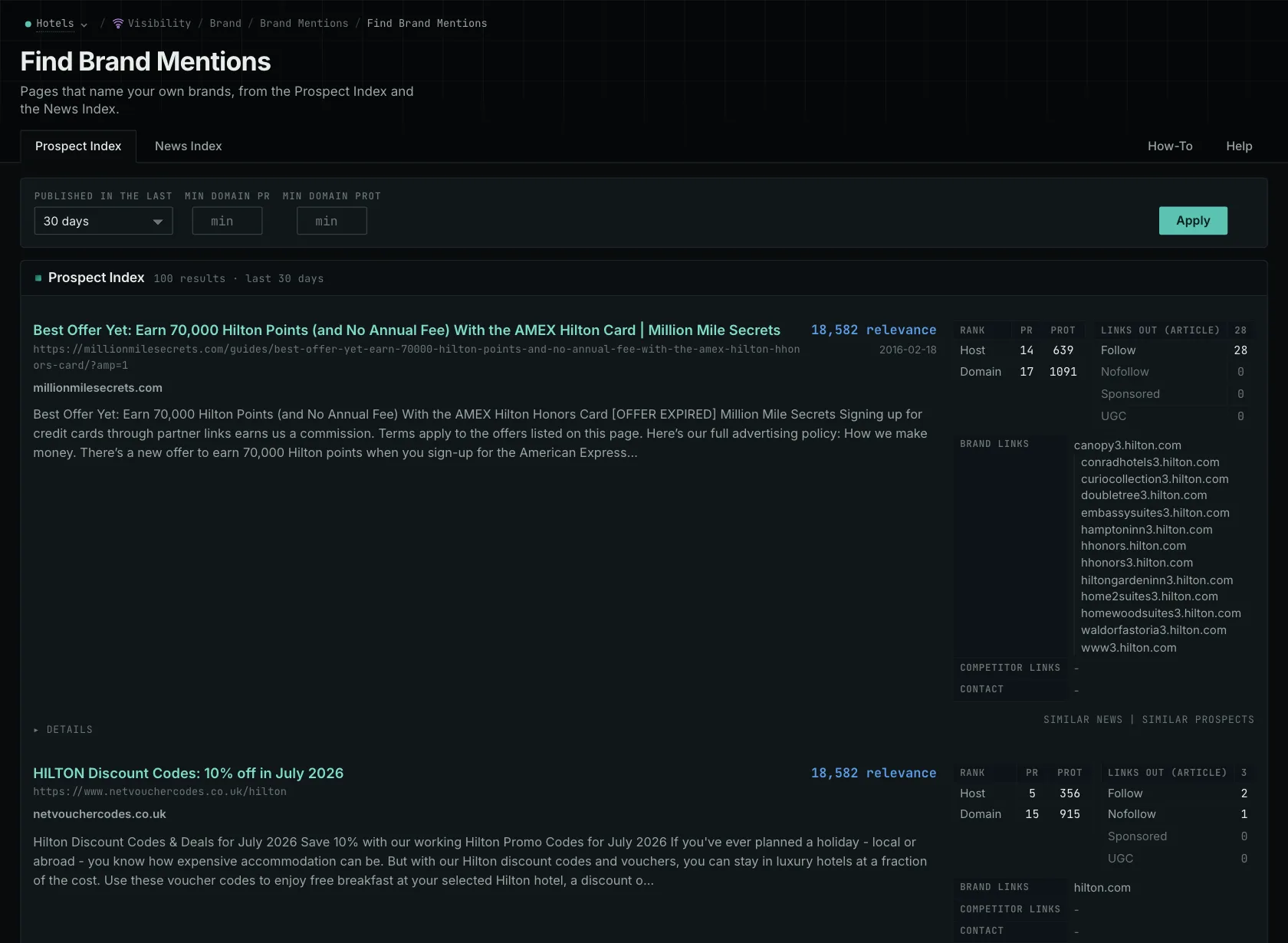
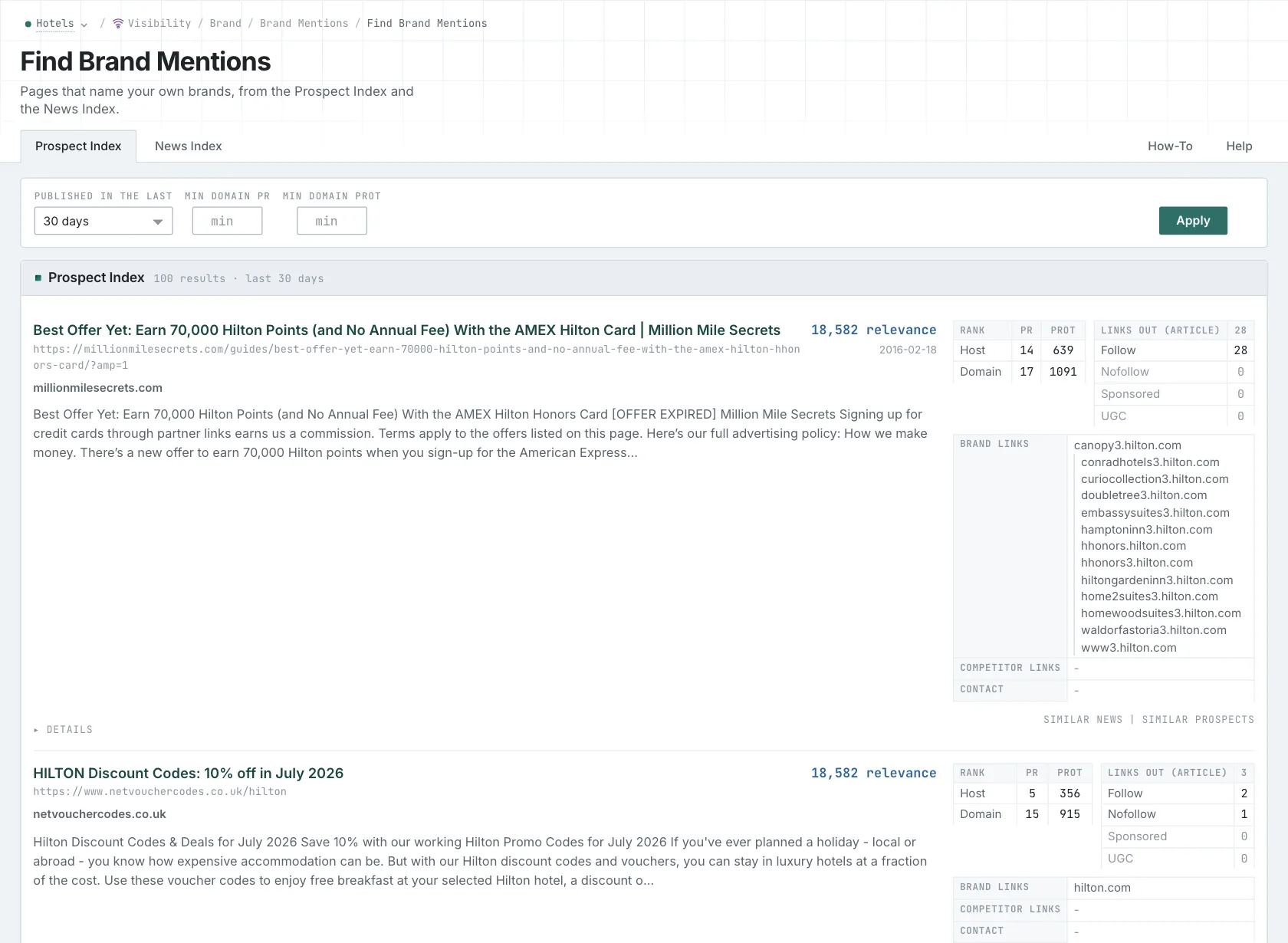
For the trade review, you need the article's wording, date, and source. To request a correction, you also need to read the current page and the publisher's contact instructions. Your business may need both kinds of work, even if one product doesn't handle them equally well.
Try doing something with a result
Some tools add sentiment, demographics, and anomaly detection to analyze the discussion. Others add journalist databases and distribution for press relations. OppAlerts adds research into whether an indexed page links to you, the contact information a site publishes, its link history, and other potential placements.
During your evaluation, try a task you'll actually need to do. For an article correction, check whether you can read the full passage, verify the error, and find the right submission route. For an audience report, check whether you can inspect the sources and analysis behind it. Follow the result past the mention count to see how useful the product is.
The search method matters too. A brand-name query looks for the words you give it. Similarity search can find related coverage from a description of the subject. That might lead you to discussion of the problem your product solves, even when nobody names your product.
Calculate usage for your actual workload
A mention-based allowance counts returned mentions. A product launch could use more of it even if you monitor the same terms. A request-based allowance counts searches or collections, so usage may depend on how many queries and providers you use and how often they run. A busy news day can change the results without changing the number of scheduled requests.
Estimate the volume and schedule you need, then ask what happens when you use the full allowance. Check the available history too. A tool focused on current coverage may not help you investigate articles from two years ago.
With OppAlerts, compare the available indexed records and date controls with the period you need to research. Keep source URLs and dated findings in your notes if you need a continuing reference to the material.
Test the publications you care about
A large source count can mean different things. One vendor may count a publication once; another may count several of its feeds. Neither count is the same as the number of documents. One source can publish plenty of articles.
Pick ten publications that matter to your market. Ask whether each is covered, how quickly items arrive, and whether you get the full text or just a headline. During a trial, look for recent items you know exist and read what comes back. That gives you a way to judge the coverage against your work.
If suppliers give custom quotes, send them the same sources, regions, languages, estimated mention volume, users, integrations, and contract length. Then you'll be comparing prices for comparable requirements. Use the tool comparison, OppAlerts monitoring guide, and monitoring glossary to assess the offers.
See how OppAlerts fits your work.
Tell me what you are working on and what you need to find out. I can walk you through the relevant reports and explain what OppAlerts can help you do.
You can explore the demo first, or use this form to ask about a task or arrange a demonstration with me.